

A website that does its job: customers find you, understand you and get in touch
We build new websites and improve old ones for small and medium businesses in Norway, so they are fast on phones and bring in more enquiries.
Websites we have made
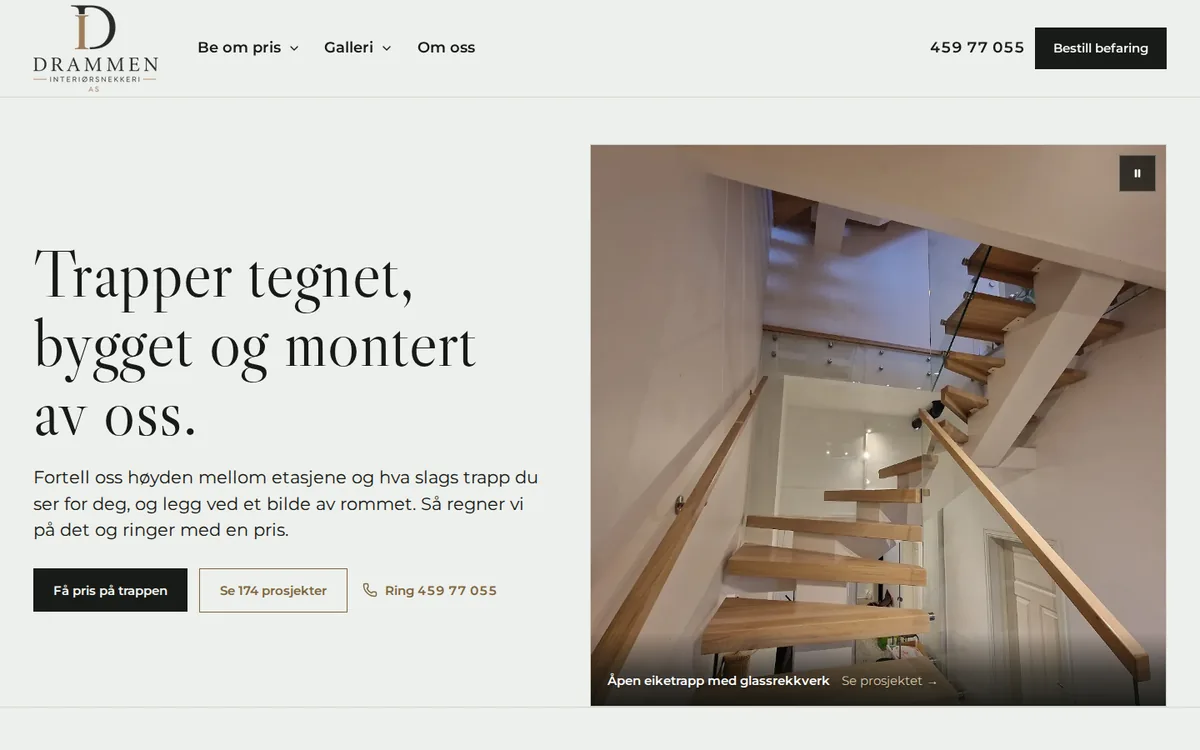
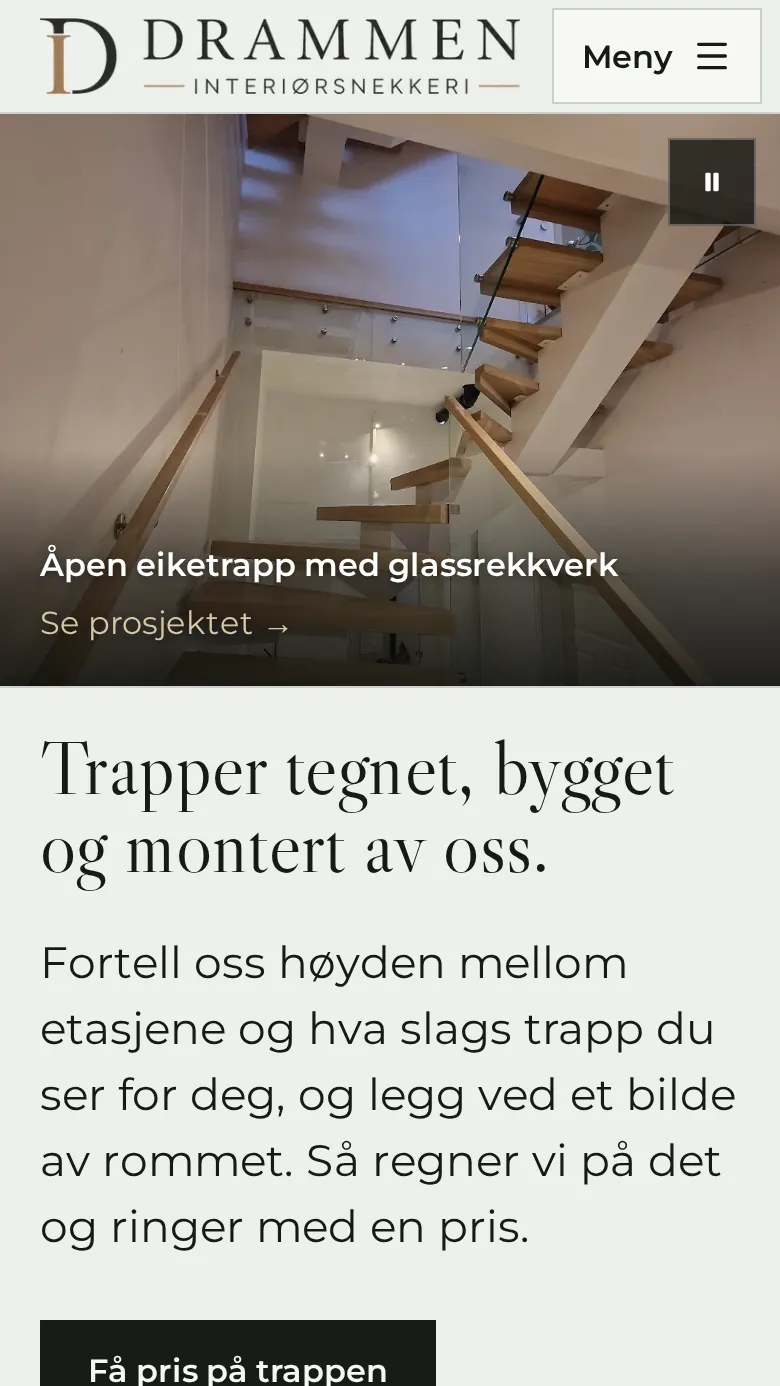
Drammen Interiørsnekkeri
New website with a quote form for stairs and railings.
See the website of Drammen Interiørsnekkeri (opens in a new tab)Read about the project Drammen Interiørsnekkeri
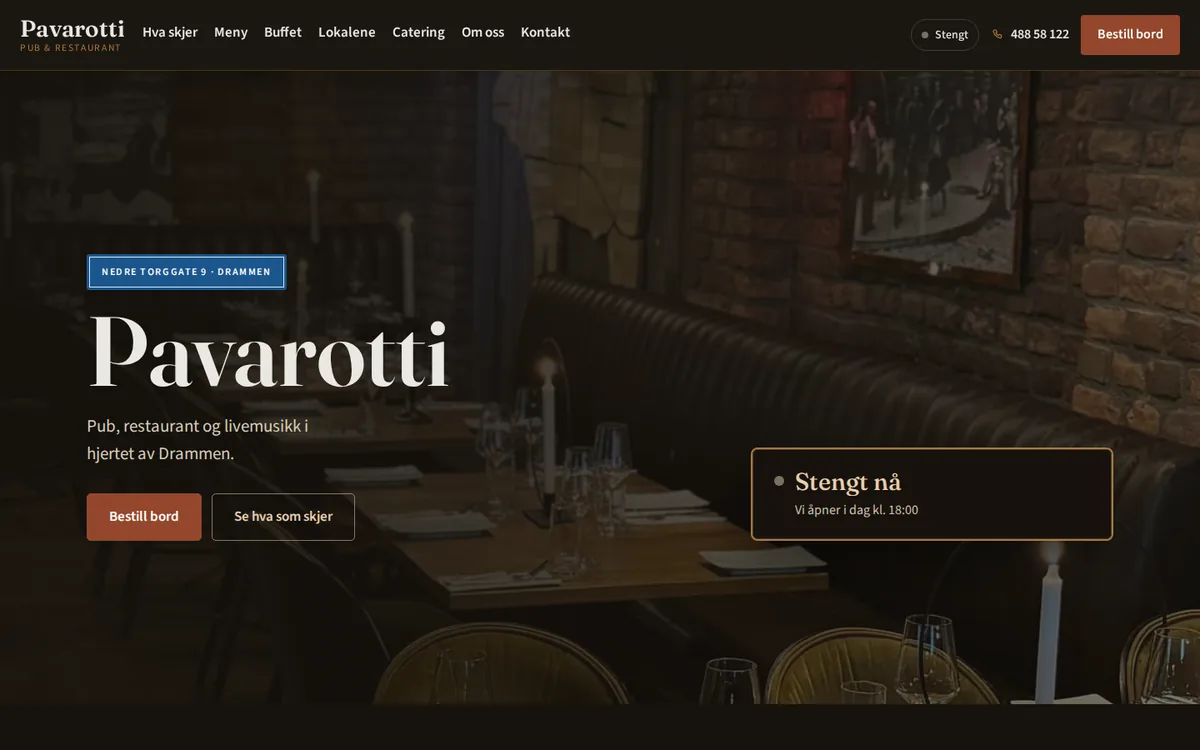
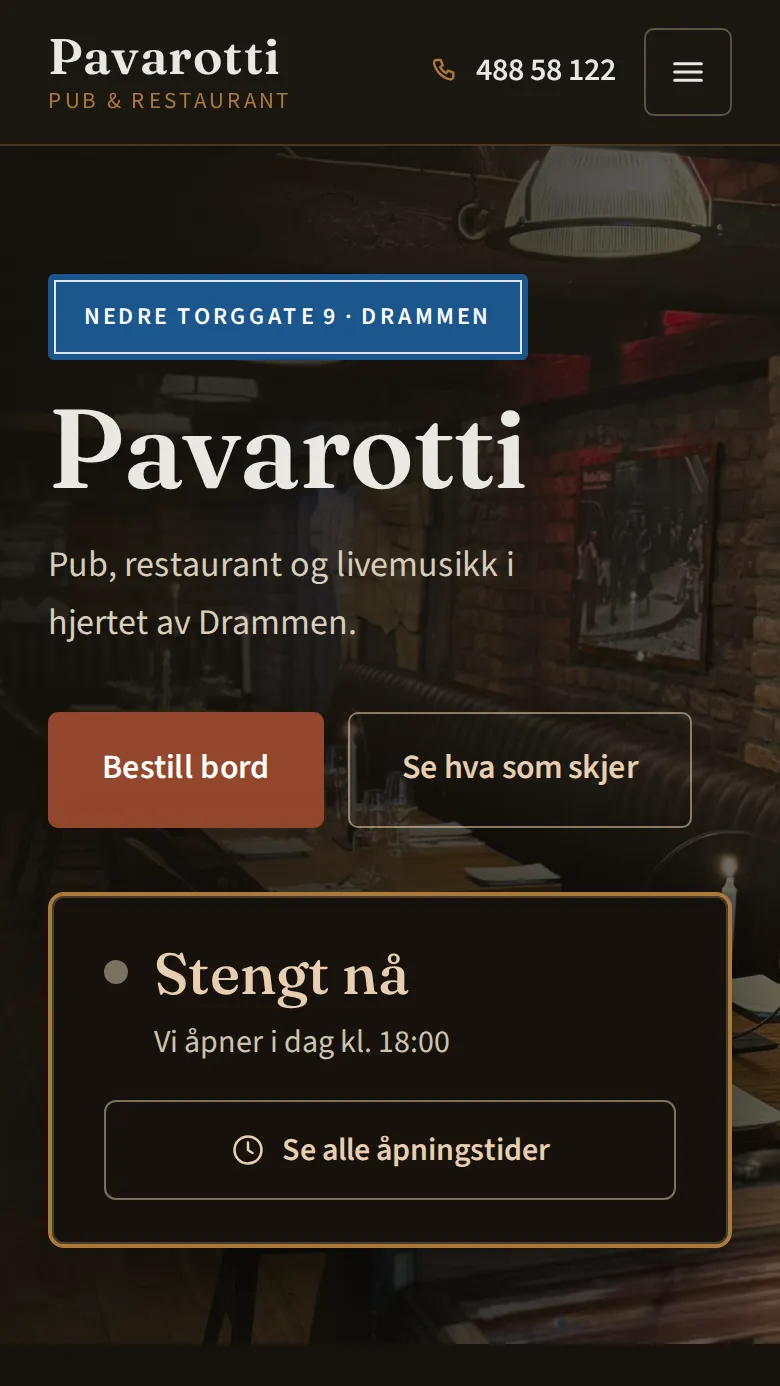
Pavarotti Pub
Buffet and Christmas-party booking that follows the kitchen’s hours — approved by staff before the guest is answered.
See the website of Pavarotti Pub (opens in a new tab)Read about the project Pavarotti Pub
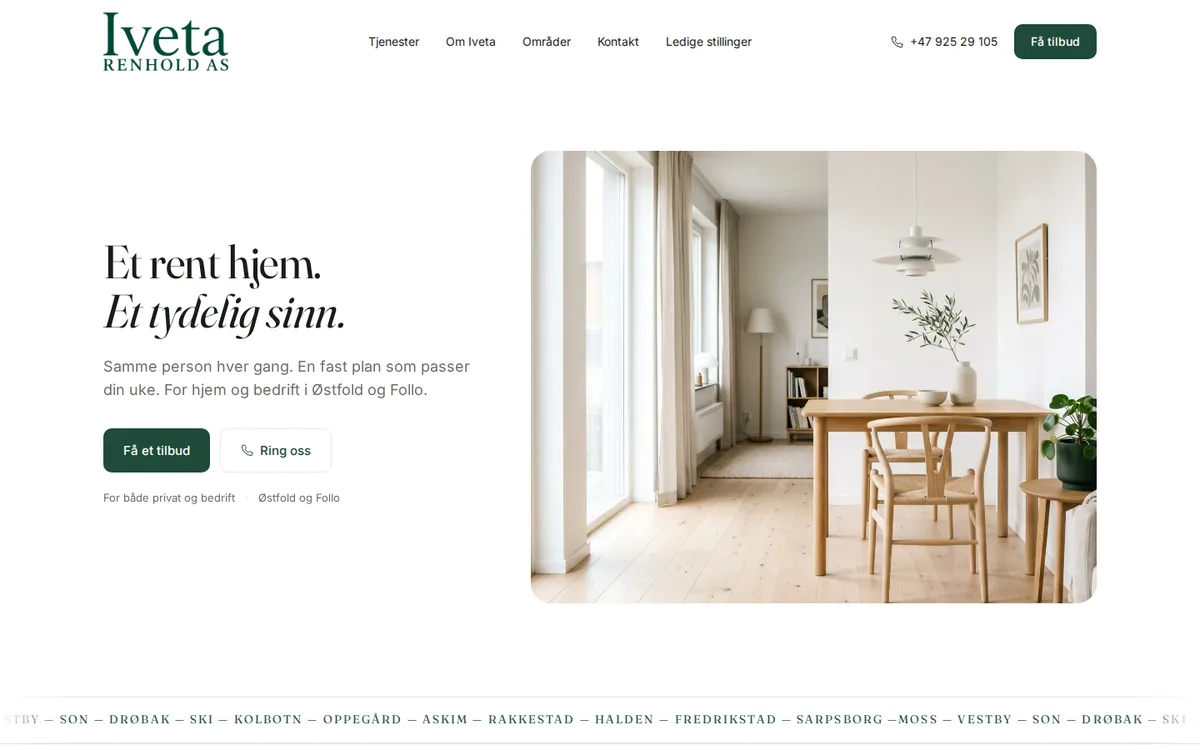
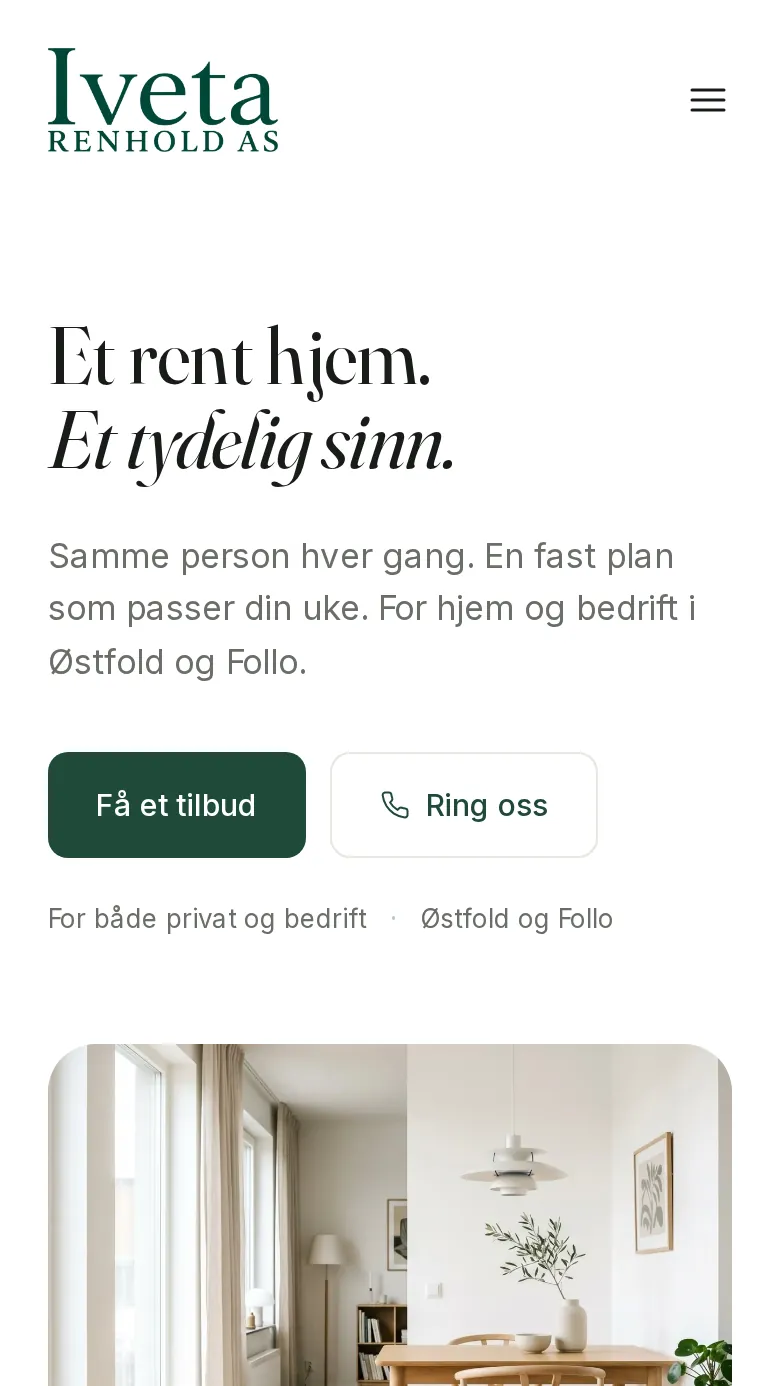
Iveta Renhold
Cleaning company website with a recruitment page and spam-protected forms.
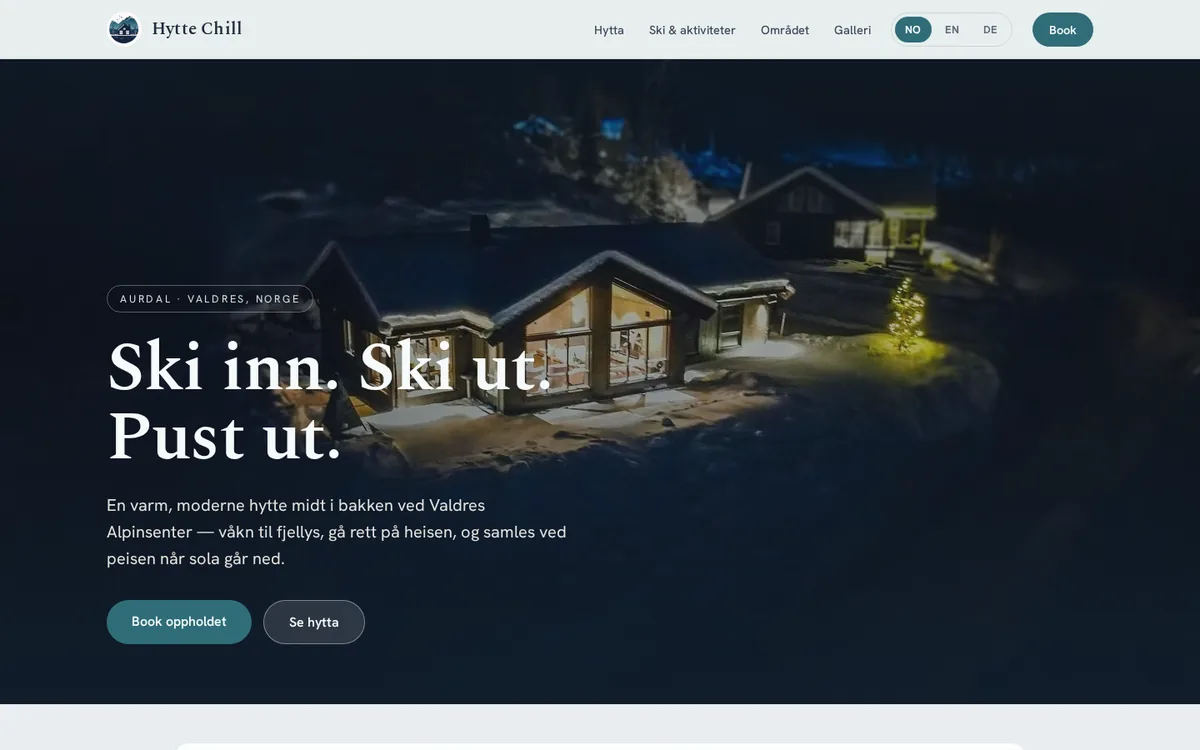
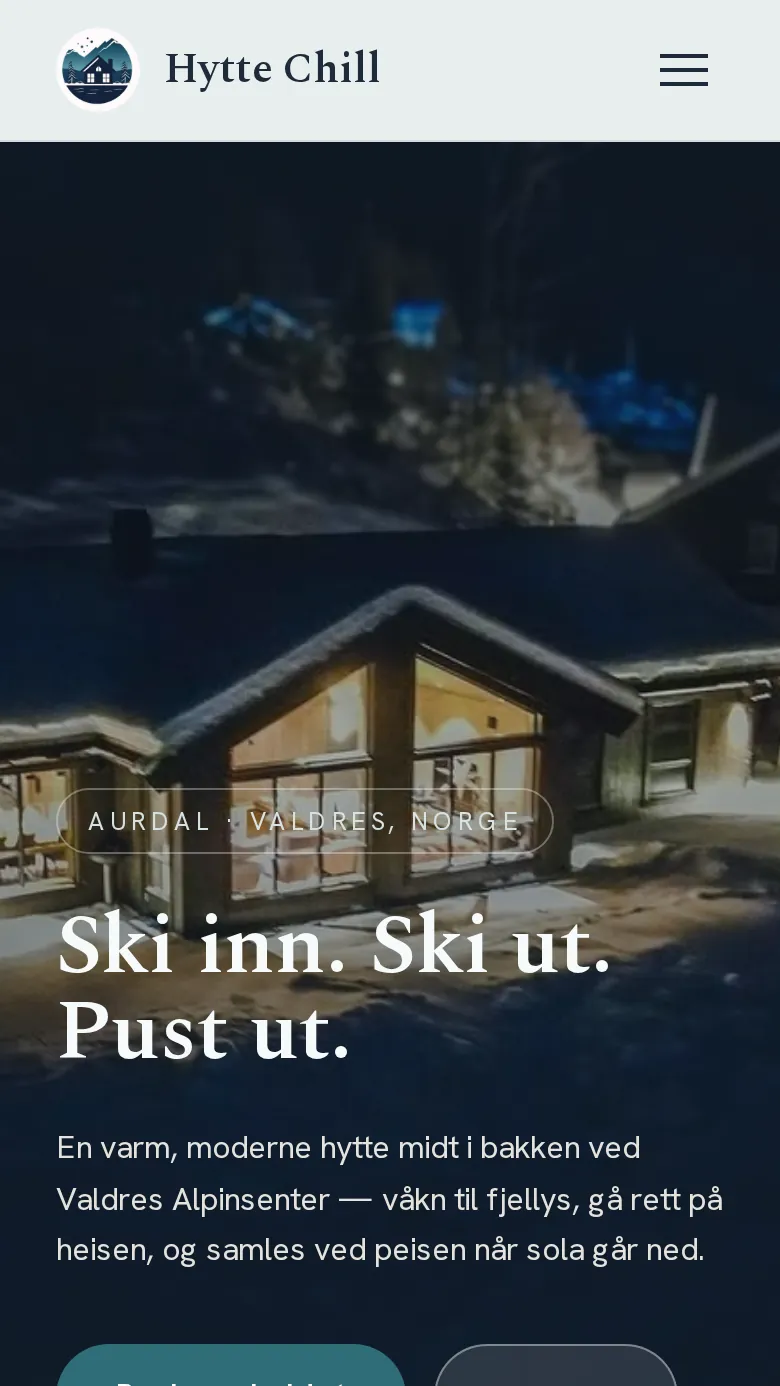
Hytte Chill
Holiday cabin site in Valdres with booking.
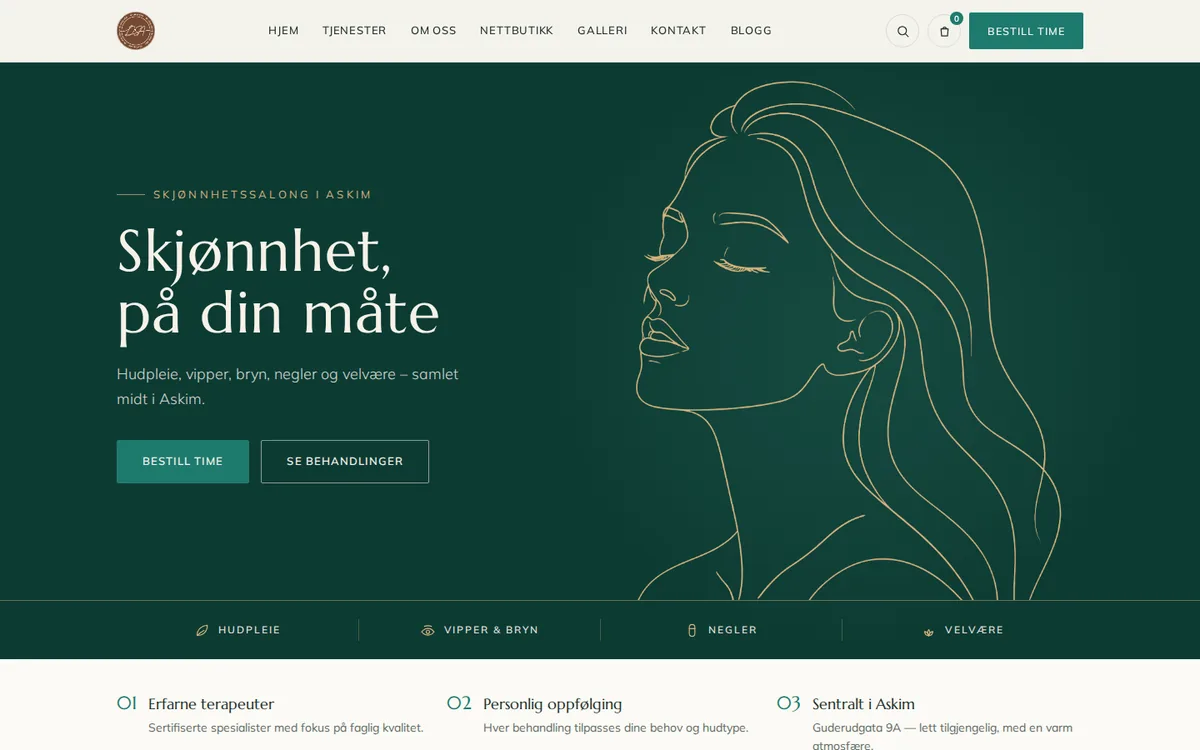
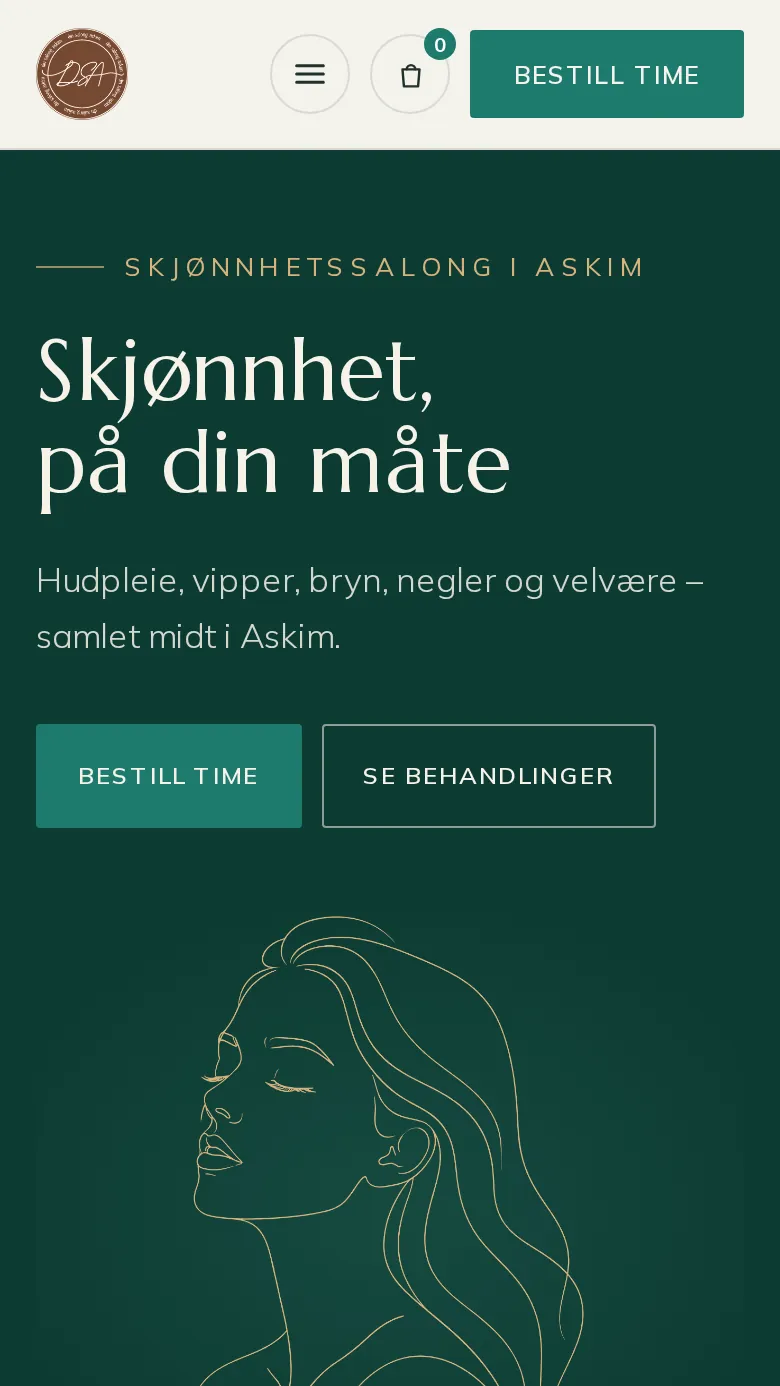
Din Salong Askim
Beauty salon website in Askim with appointment booking.
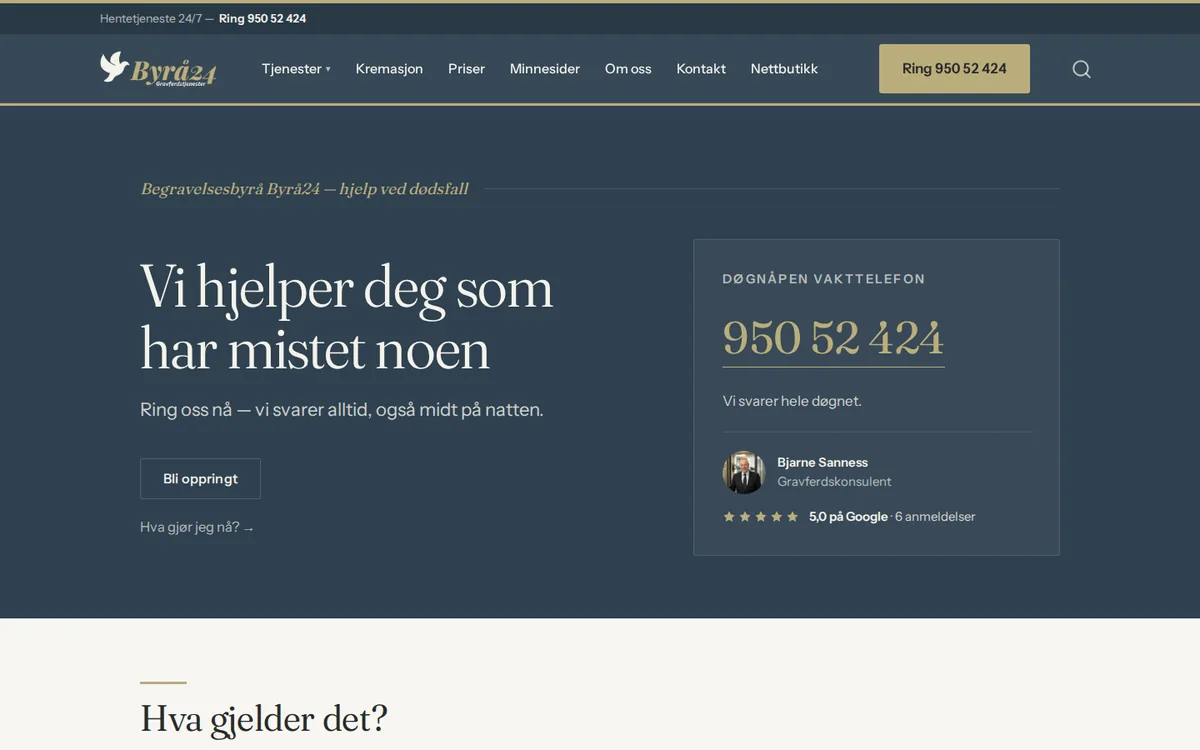
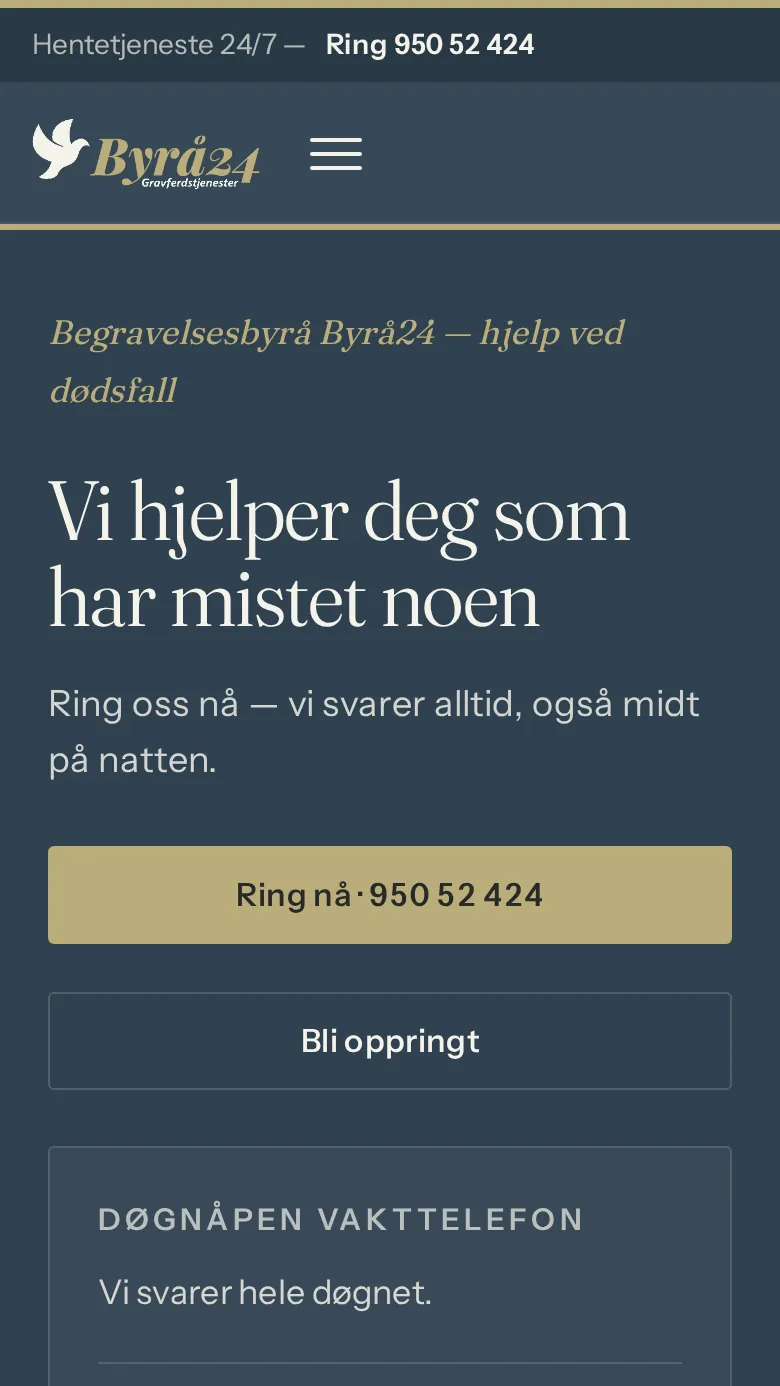
Byrå24
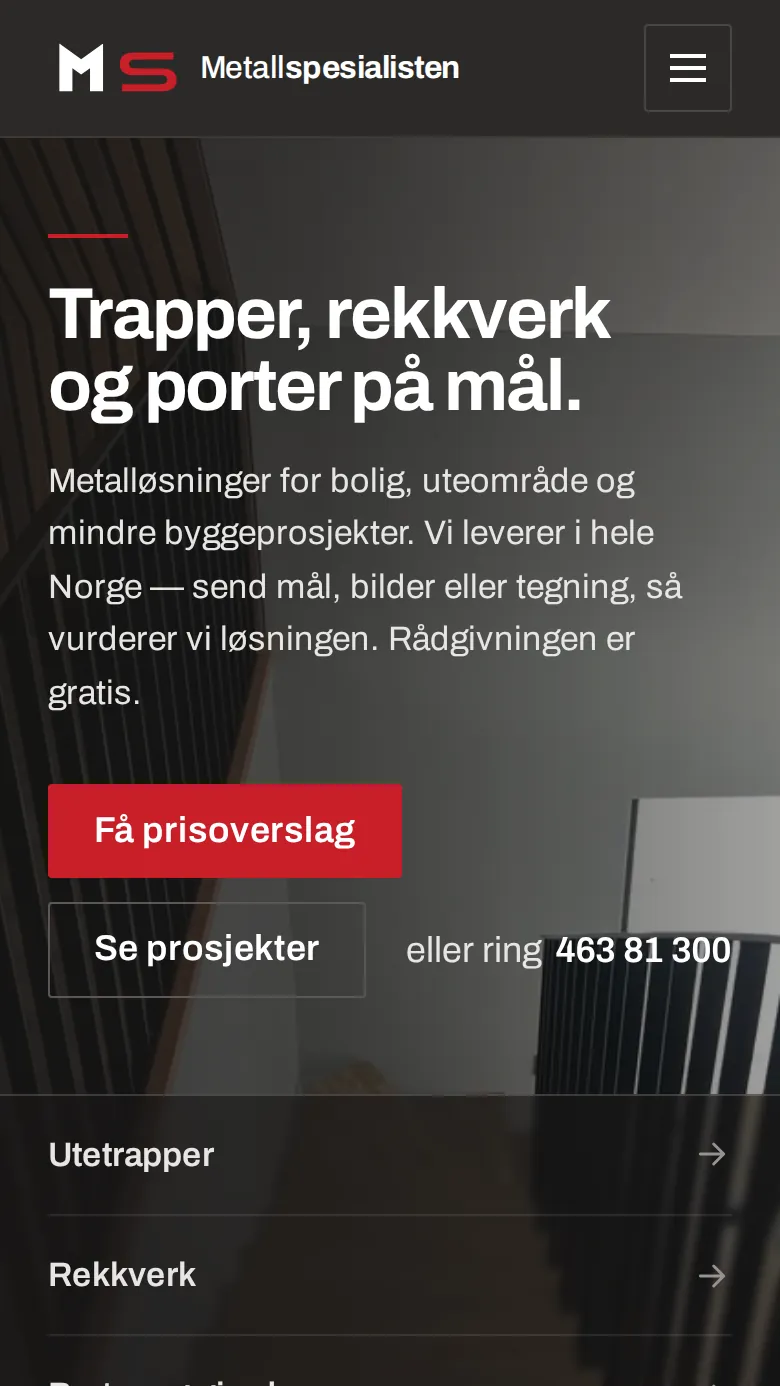
A mobile layout where the phone number is the first action on the screen.
See the website of Byrå24 (opens in a new tab)Read about the project Byrå24
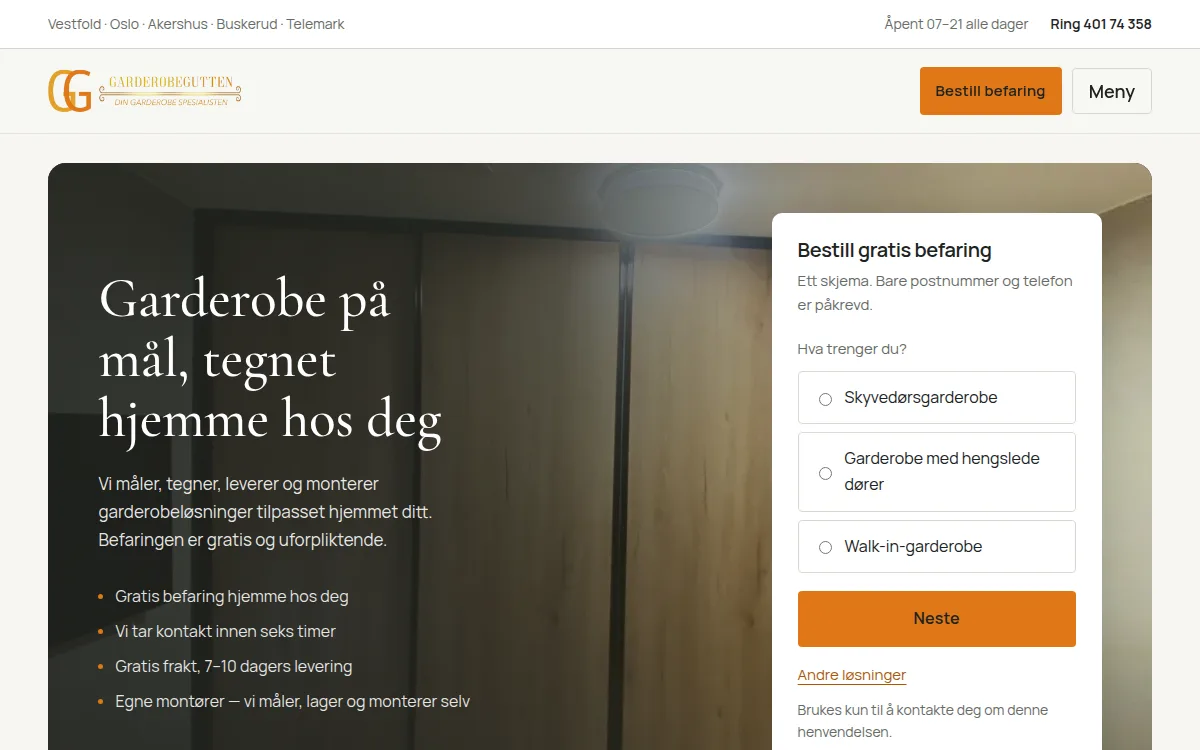
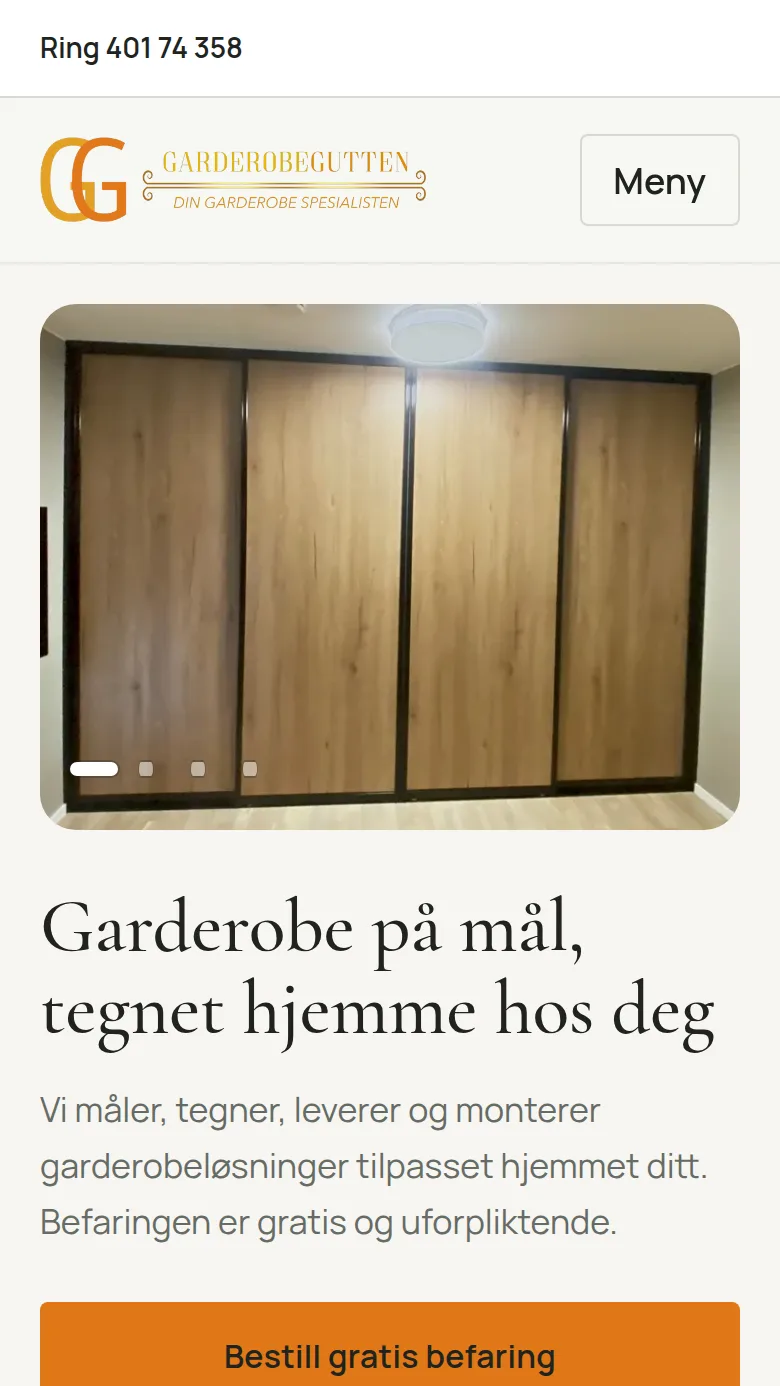
Garderobegutten
A survey booking form at the top of the page — the customer picks a wardrobe type and leaves a postcode and a phone number.
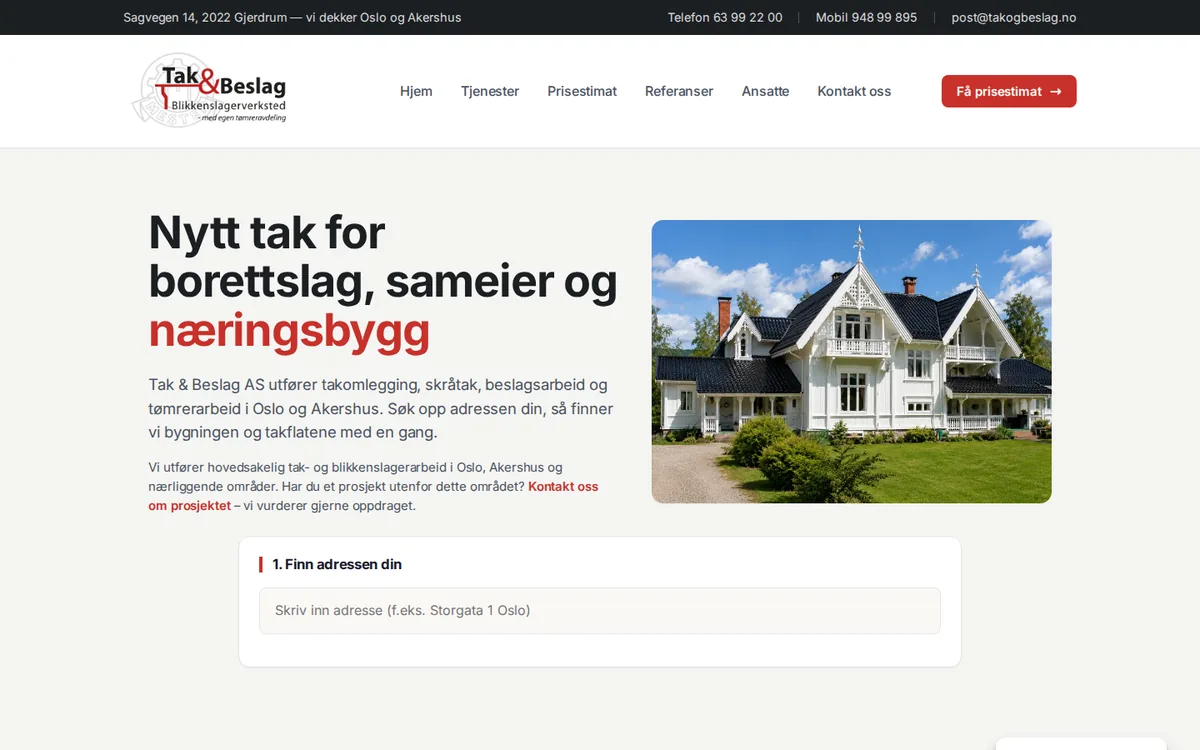
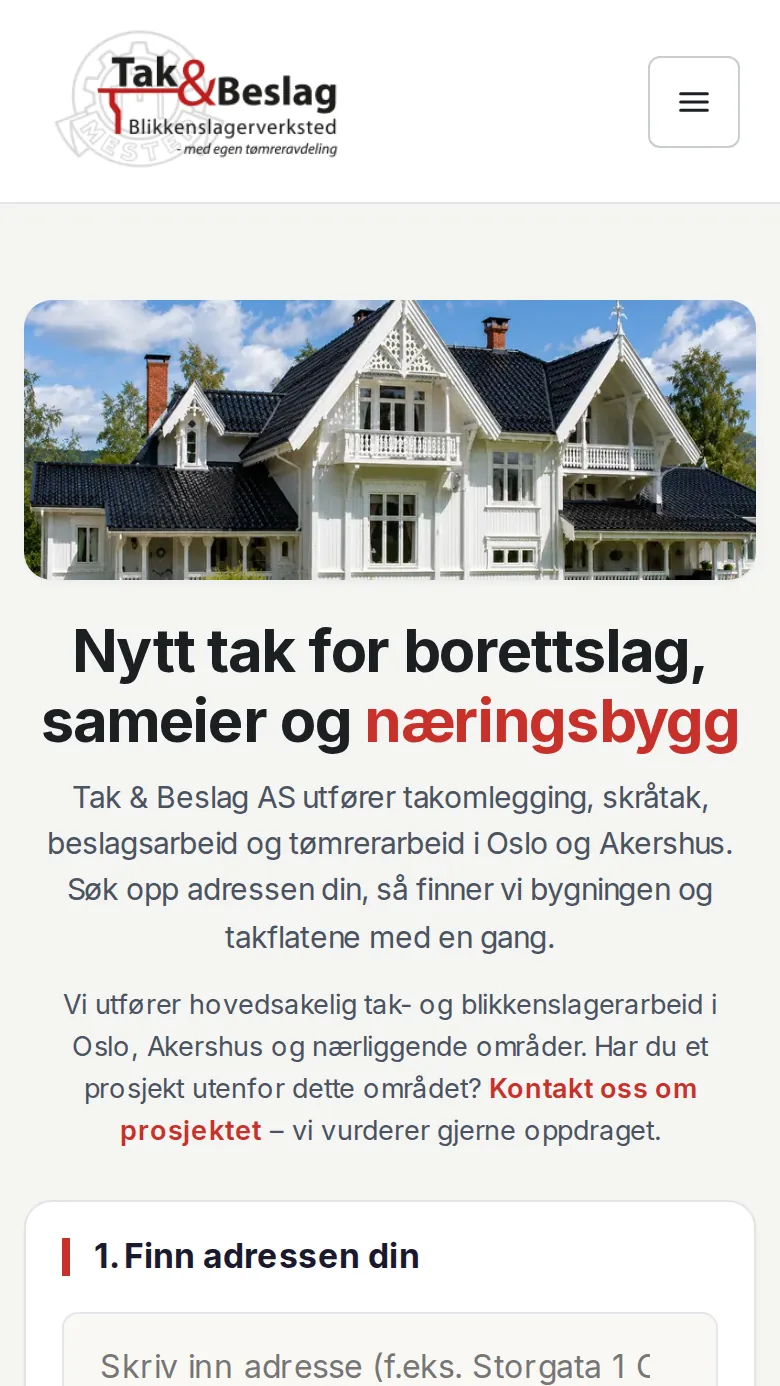
Tak & Beslag
A roof calculator that gives the customer a price estimate right on the page.
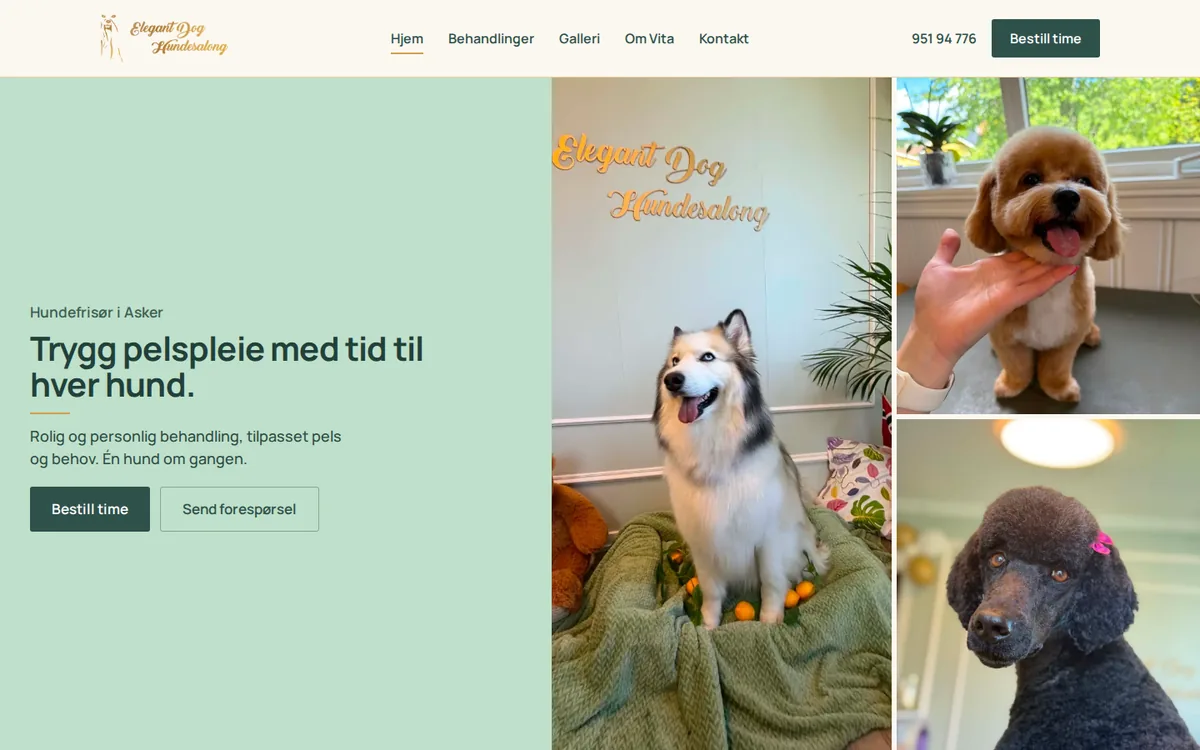
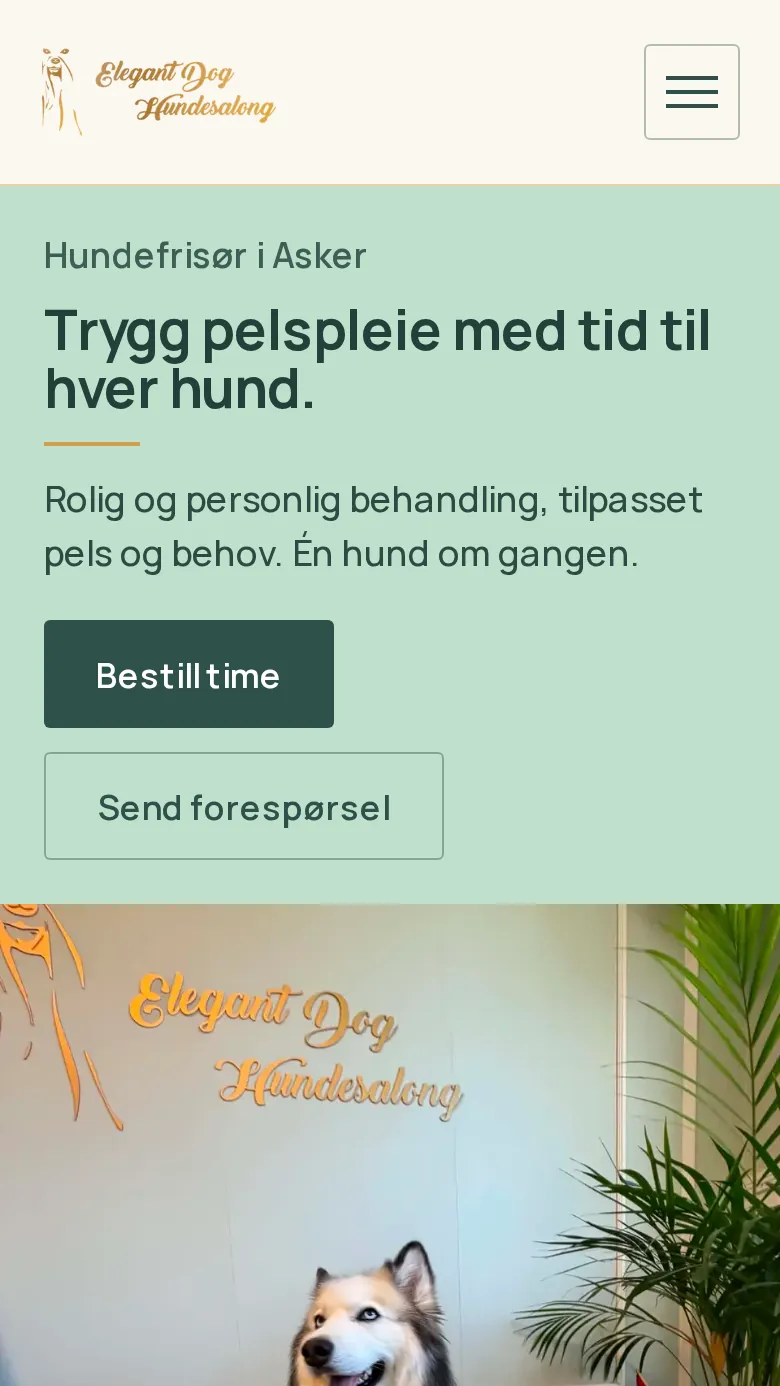
Elegant Dog
Dog groomer website in Asker with appointment booking.
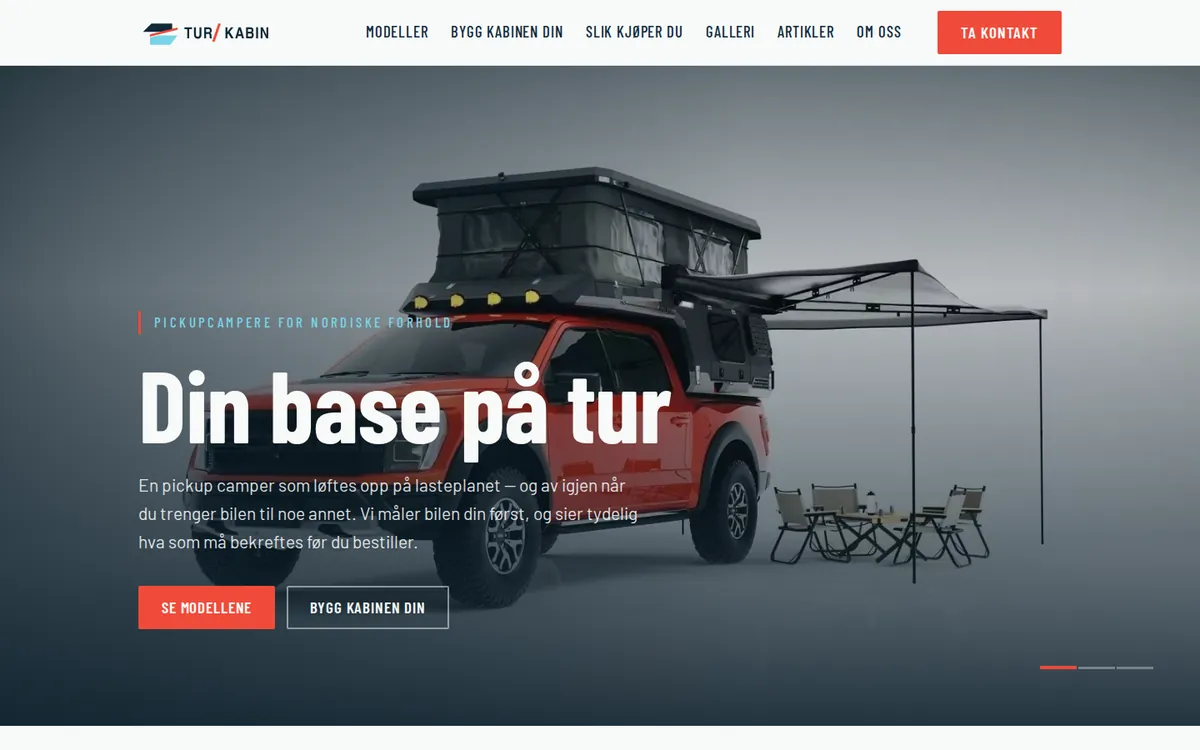
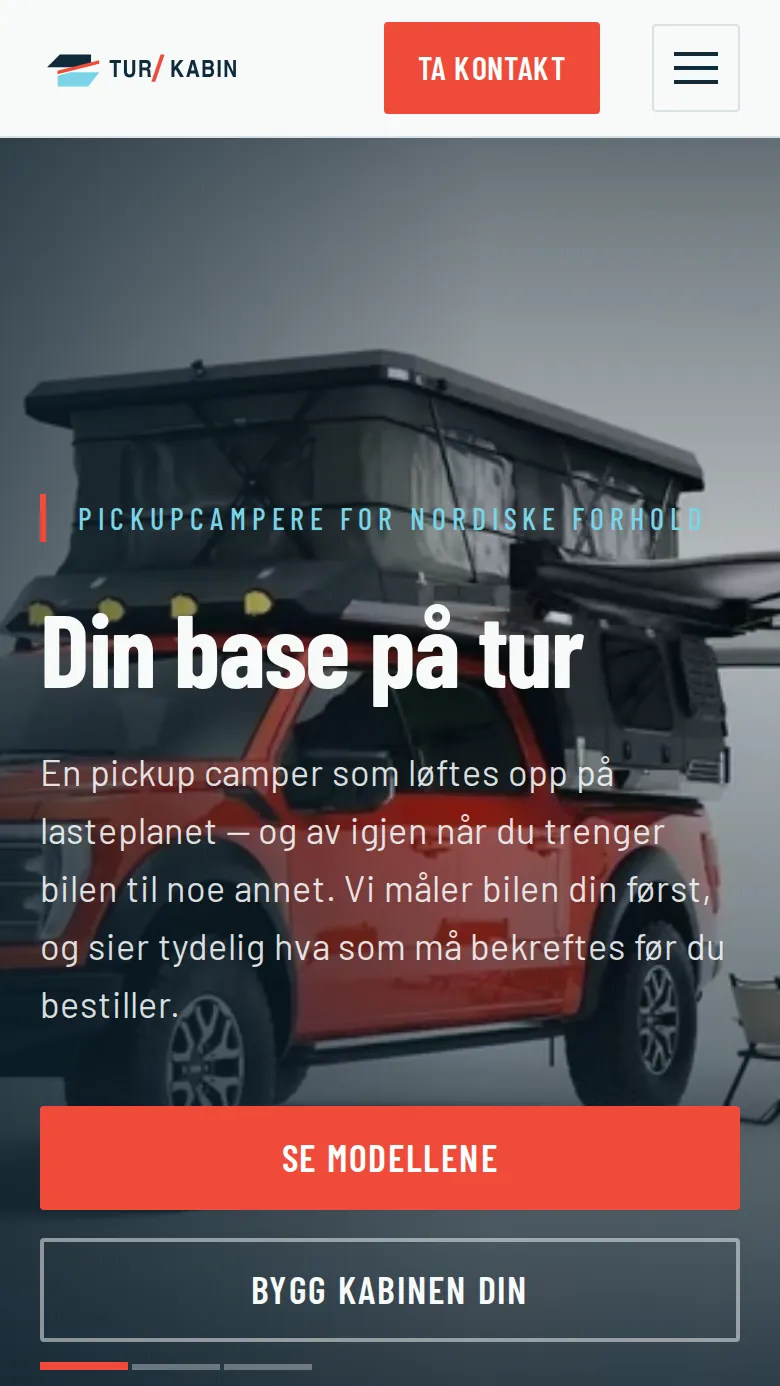
TUR/KABIN
Pickup-camper website — built and run by us.
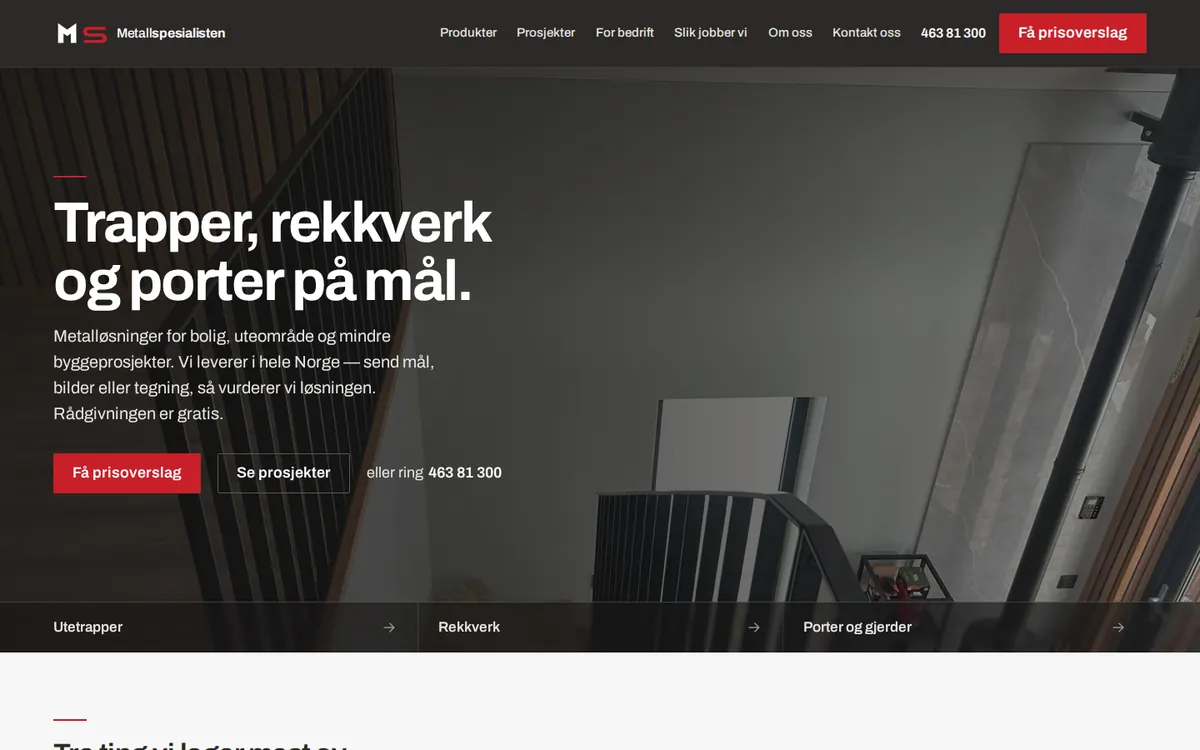
Metallspesialisten
Stairs, railings and gates made to measure — our own venture; site built and run by us.
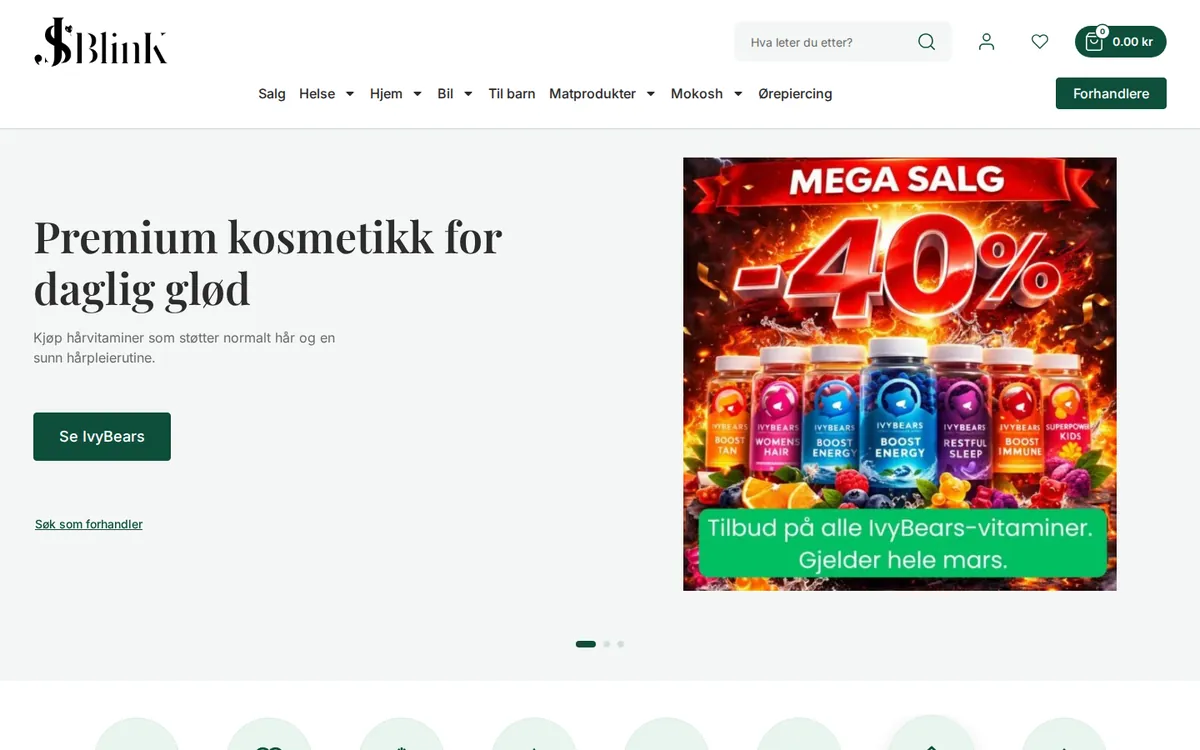
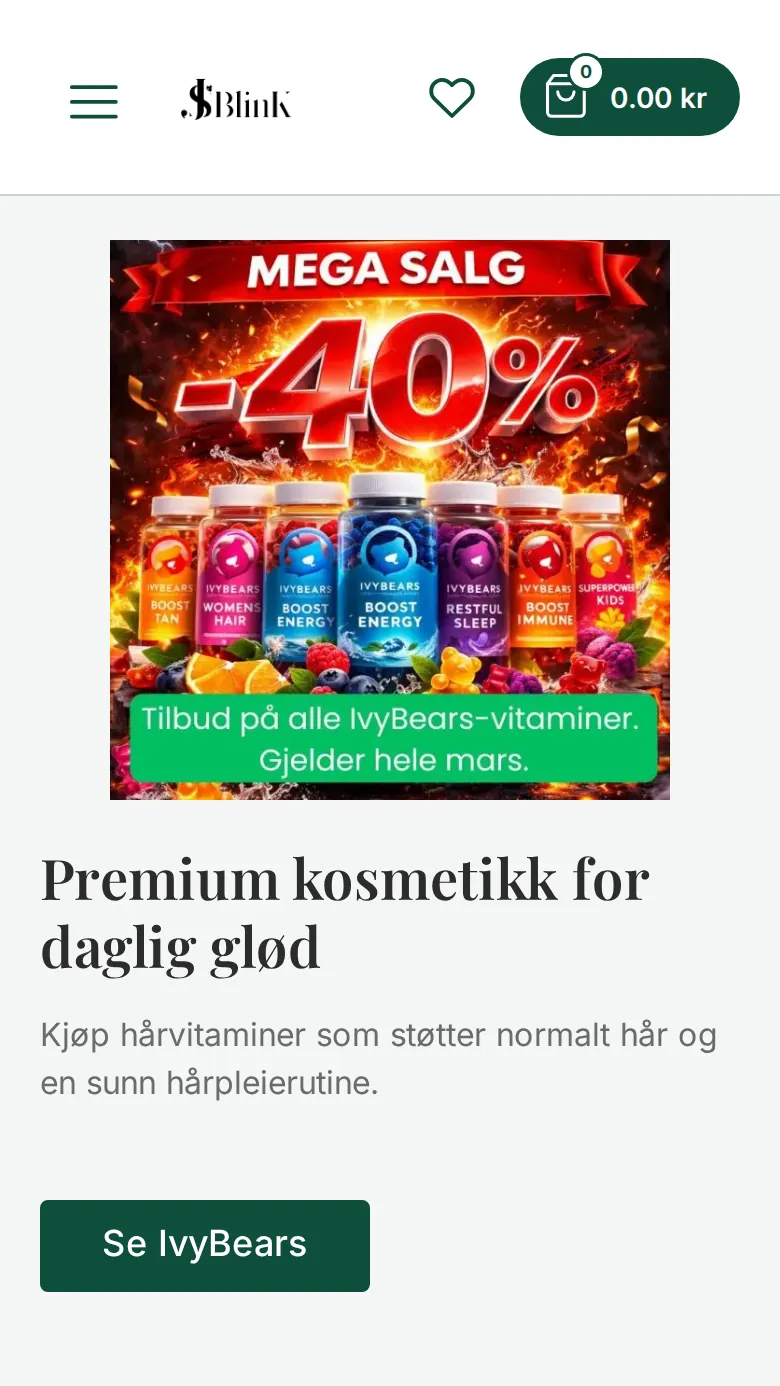
JSBlink
Online booking for ear piercing, built as its own module.
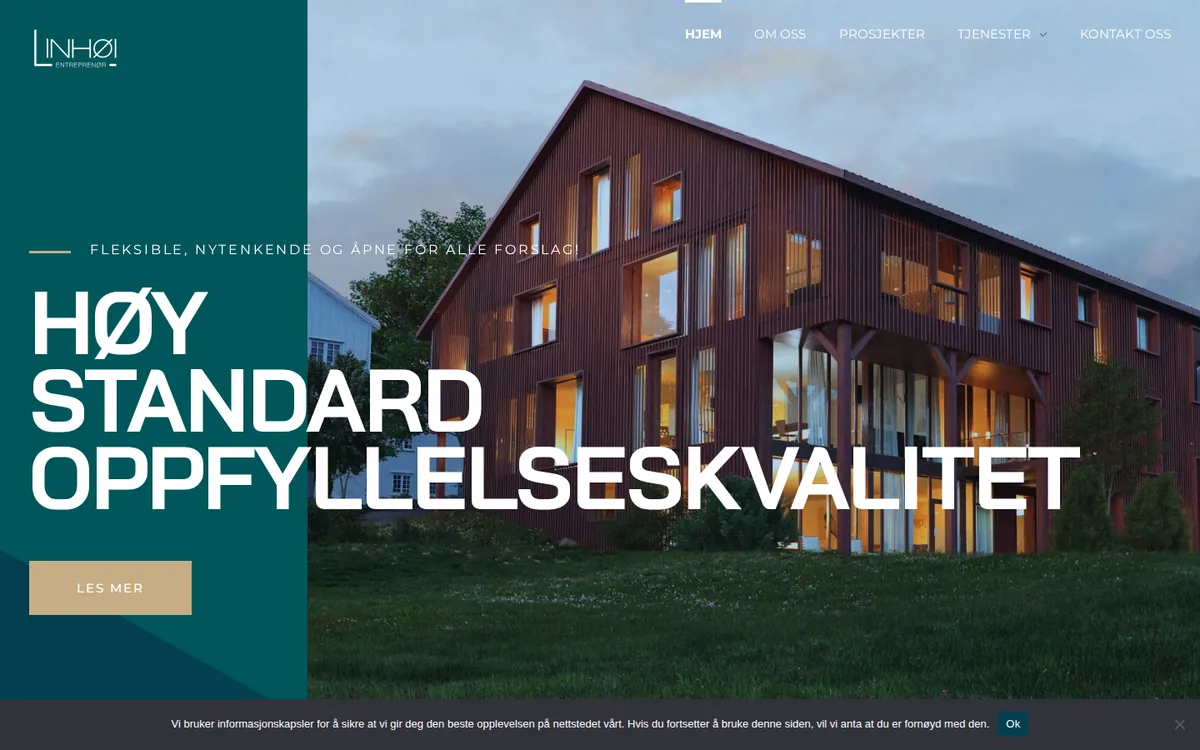
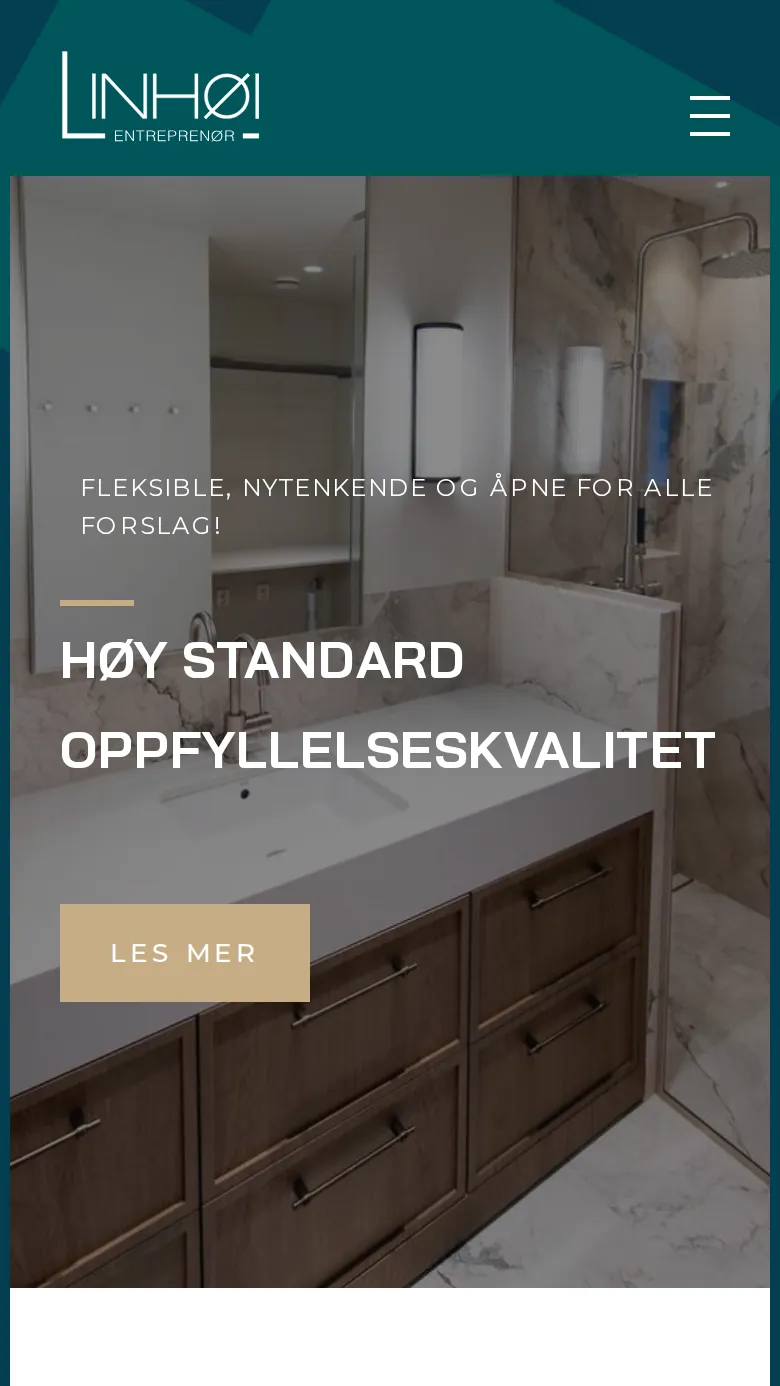
Linhøi Entreprenør
Project gallery with references — entered and maintained by us.
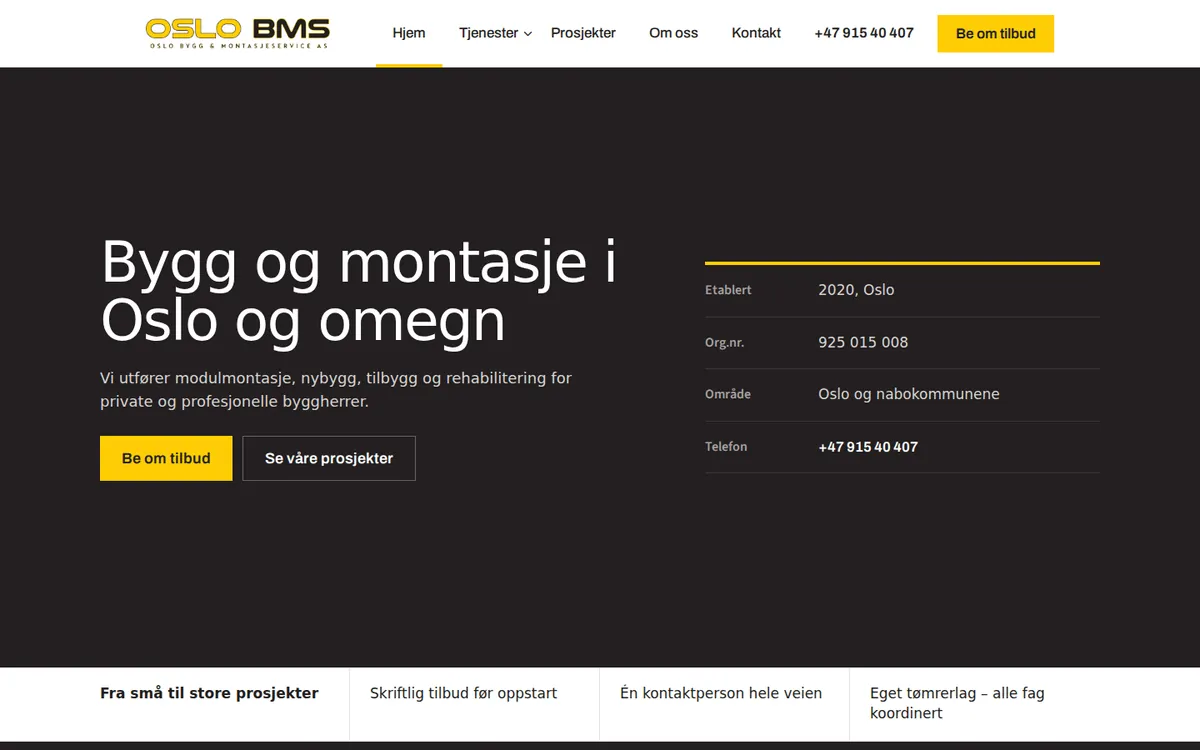
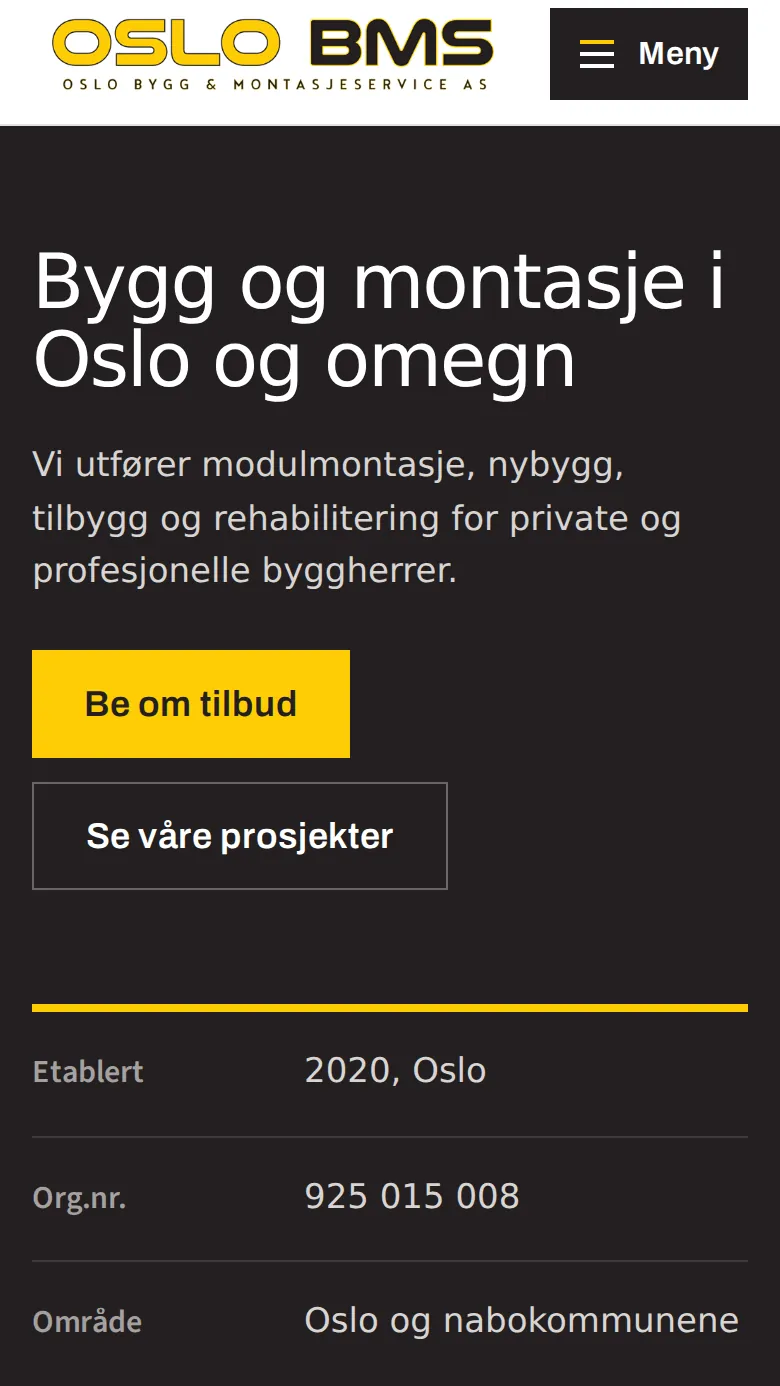
Oslo Bygg og Montasjeservice
Website for a construction and installation company in Oslo — built and launched by us in August 2026.
See the website of Oslo Bygg og Montasjeservice (opens in a new tab)
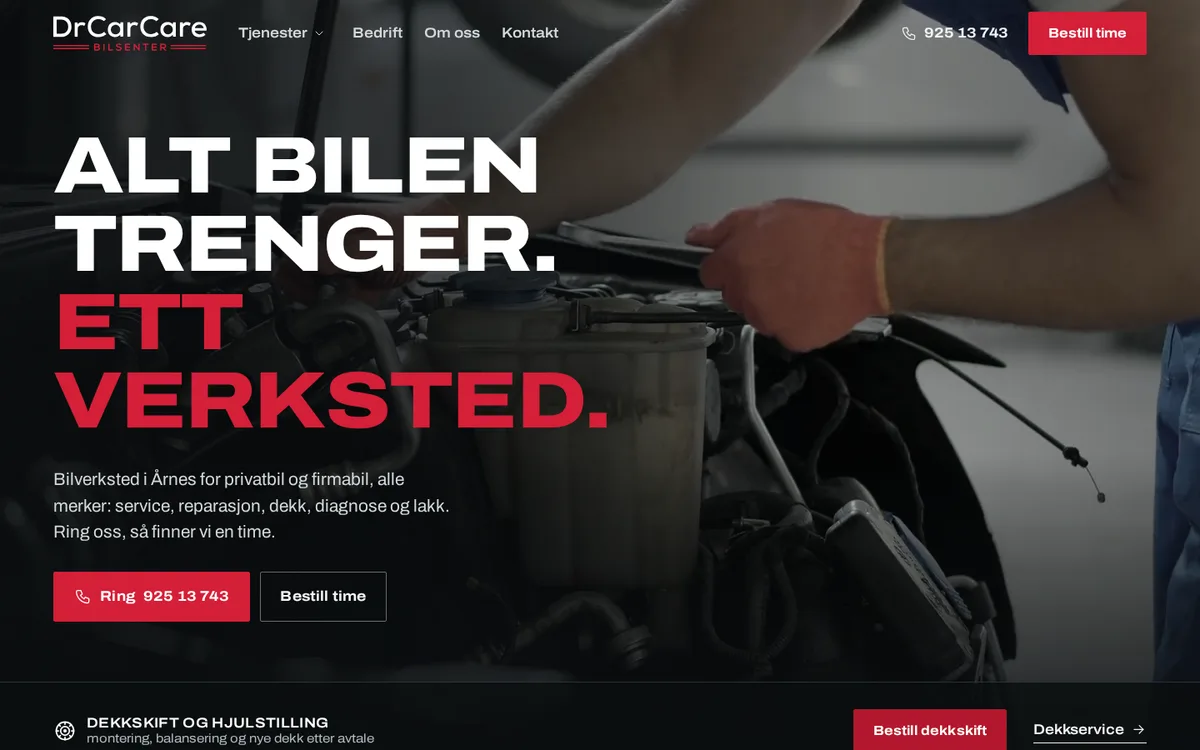
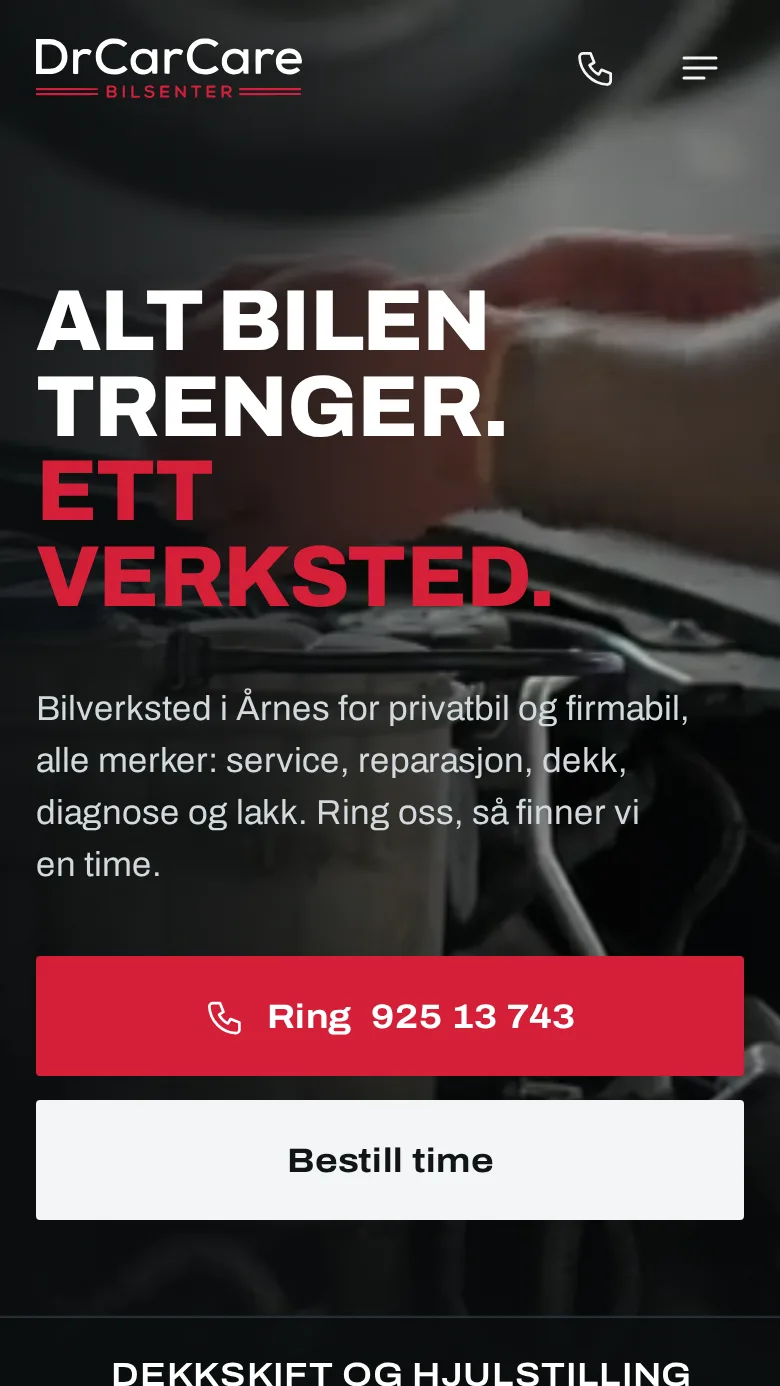
Dr Car Care
Car-workshop website in Årnes with online booking and tyres and rims in stock.
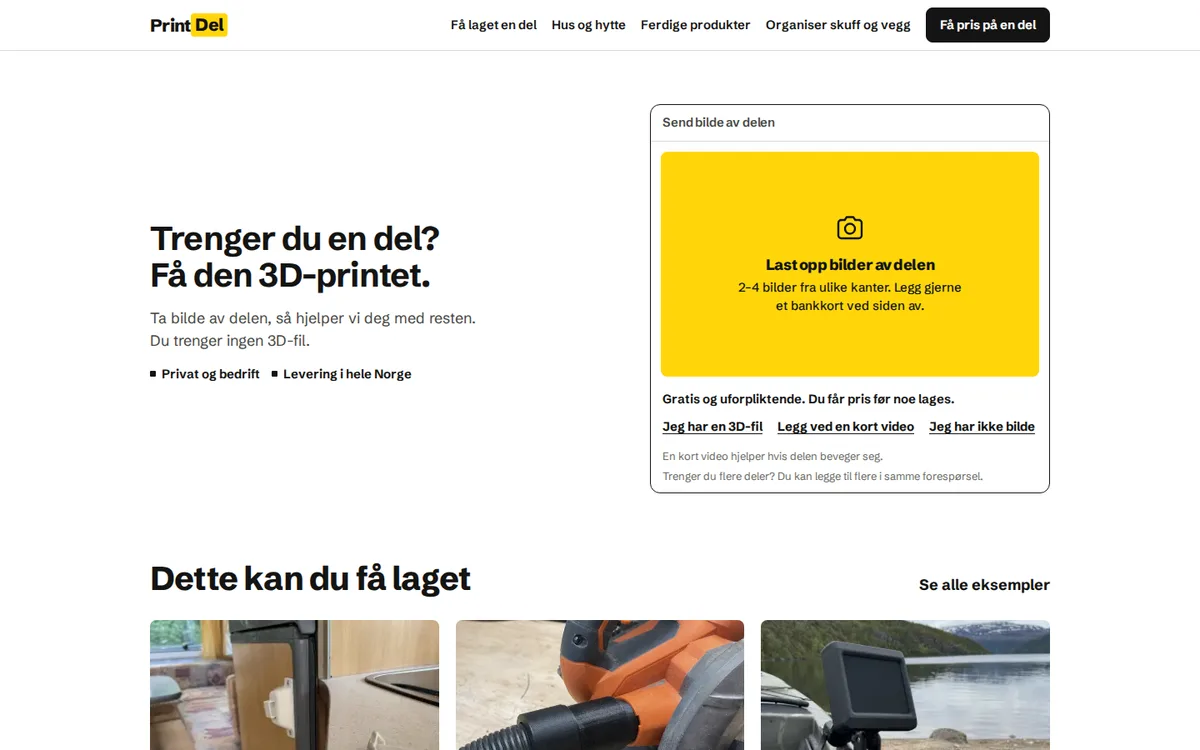
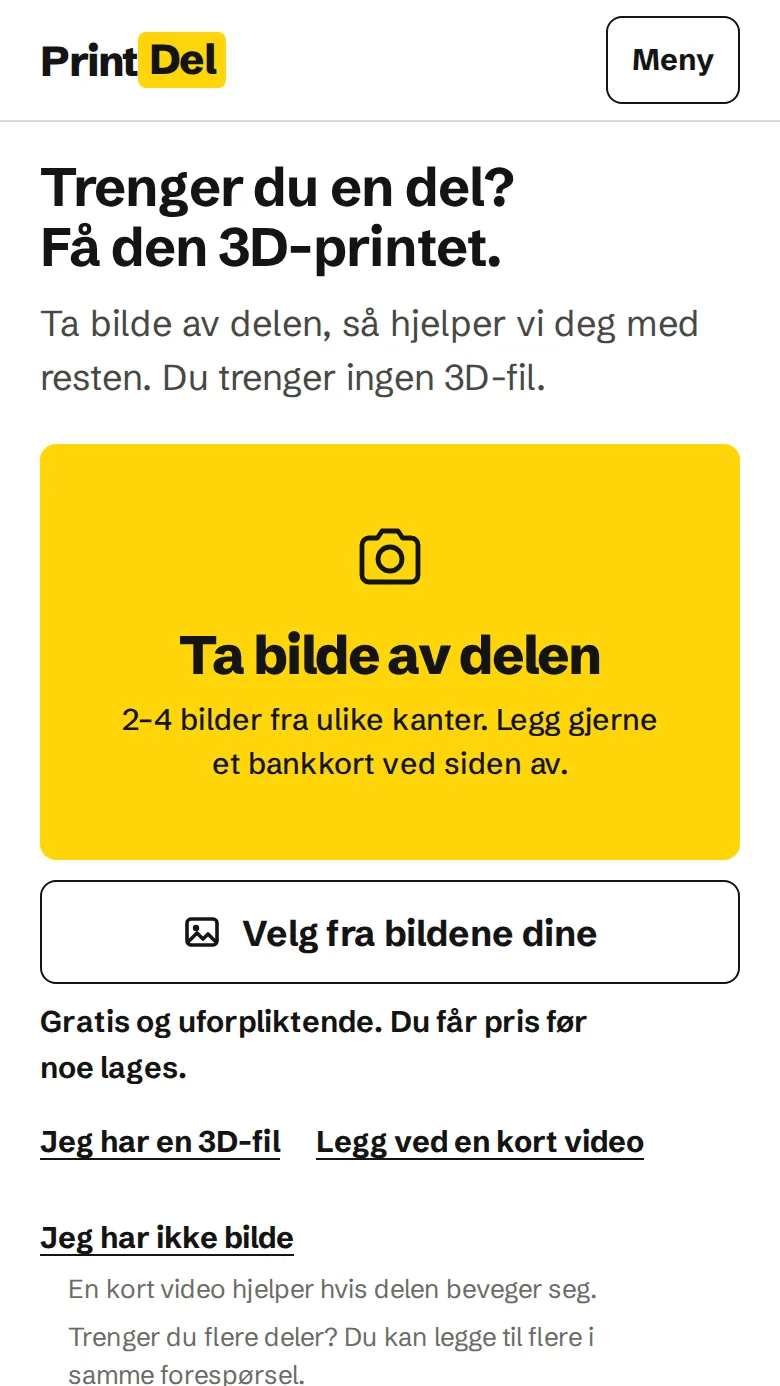
PrintDel
3D-printed spare parts to order — the customer sends a photo of the part and gets a price.
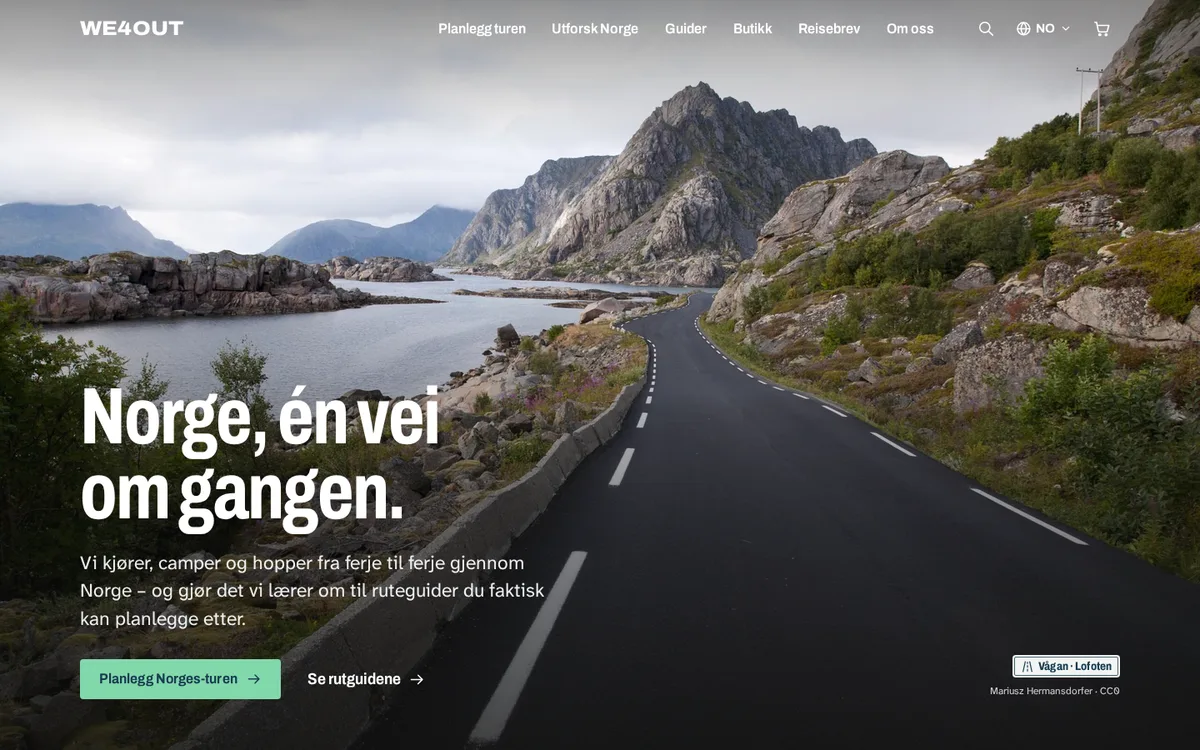
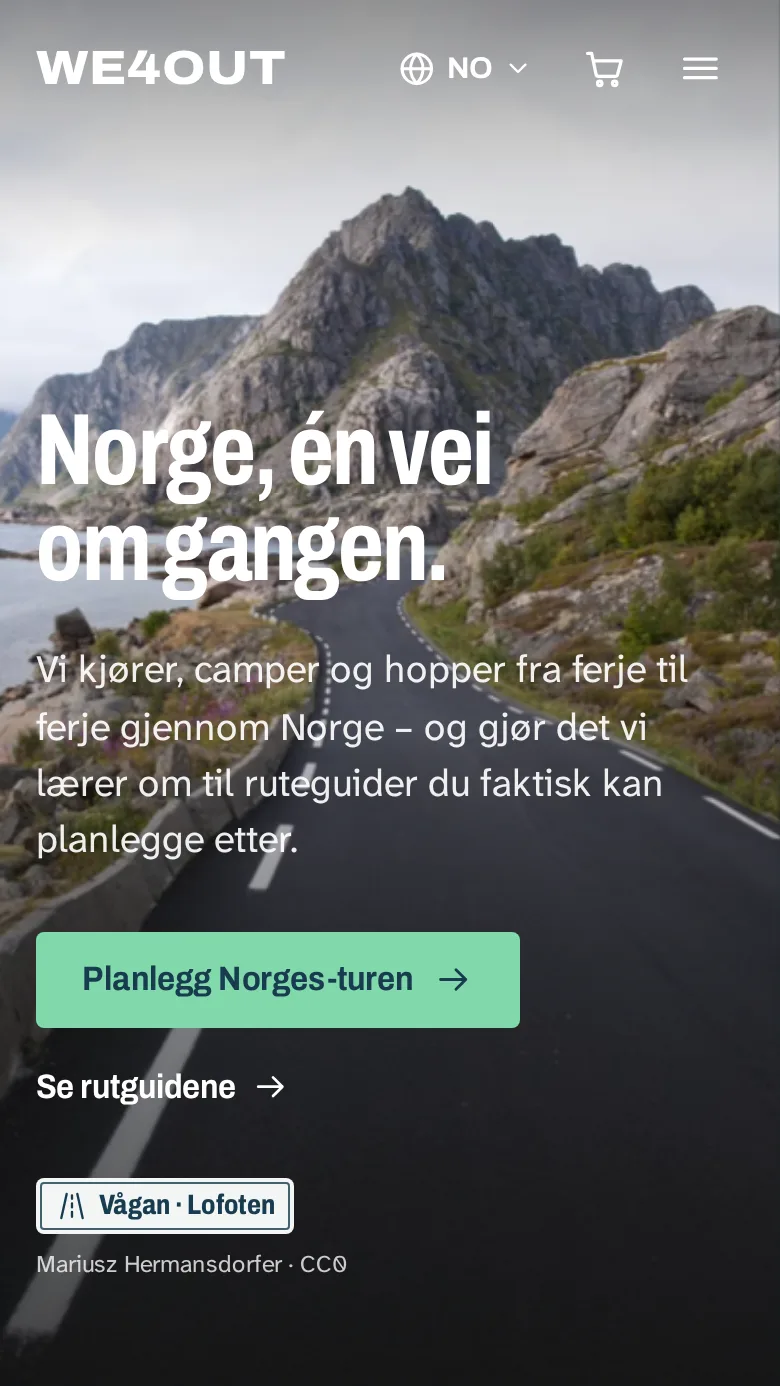
We4Out
Road-trip route guides for Norway, in five languages.
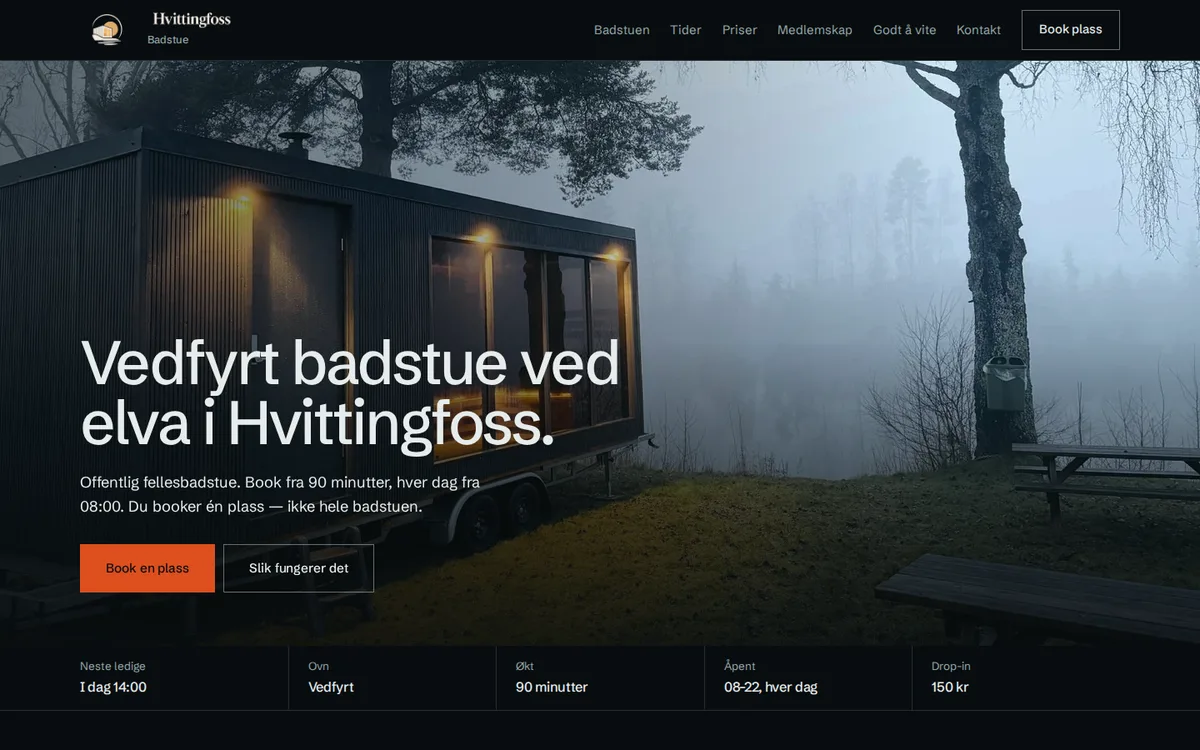
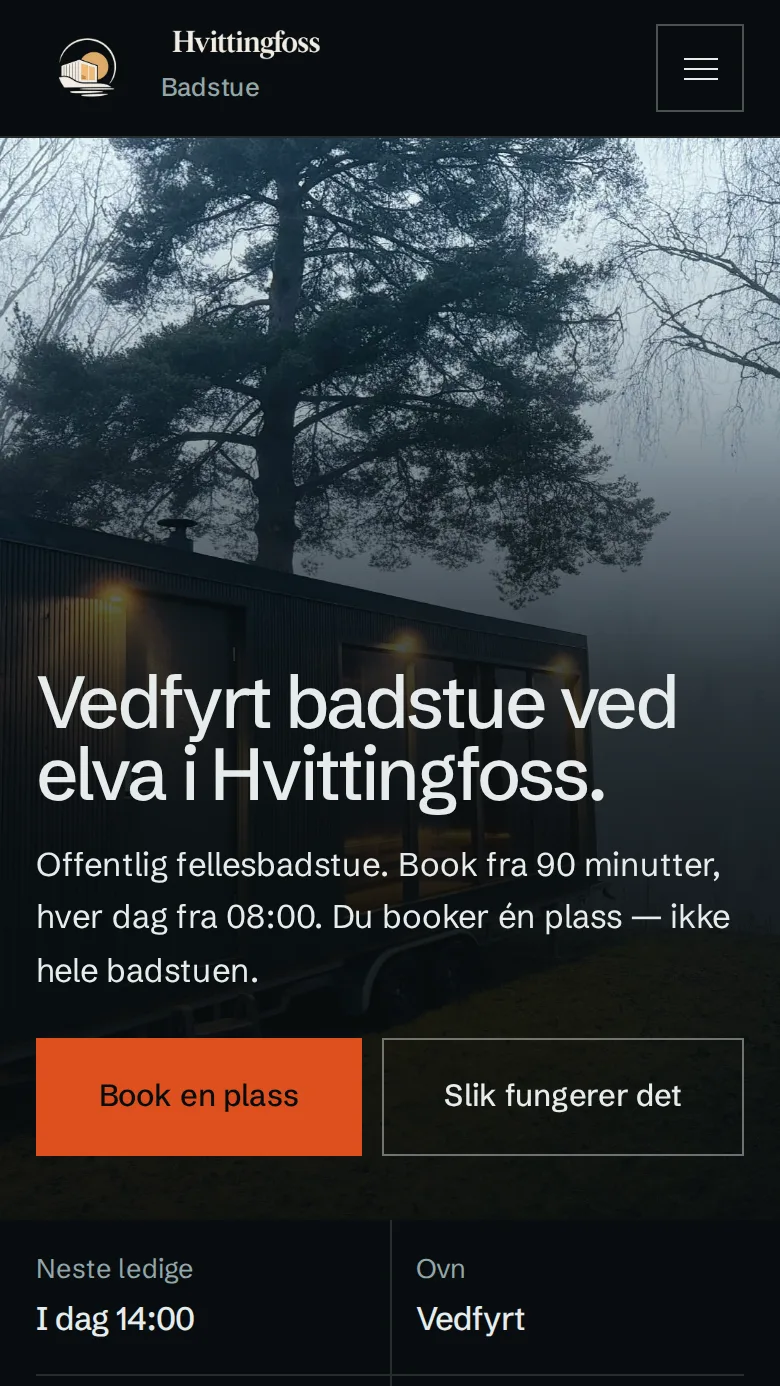
Hvittingfoss Badstue
Wood-fired riverside sauna — guests book a 90-minute place straight on the site.
See the website of Hvittingfoss Badstue (opens in a new tab)
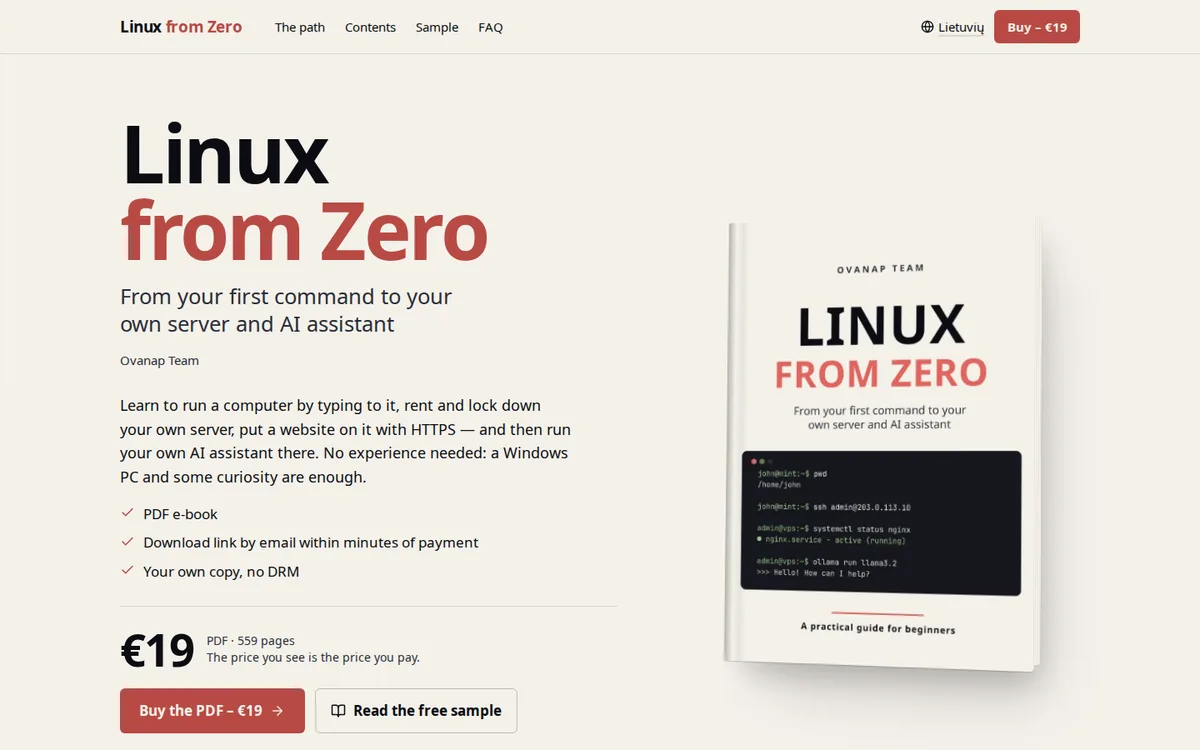
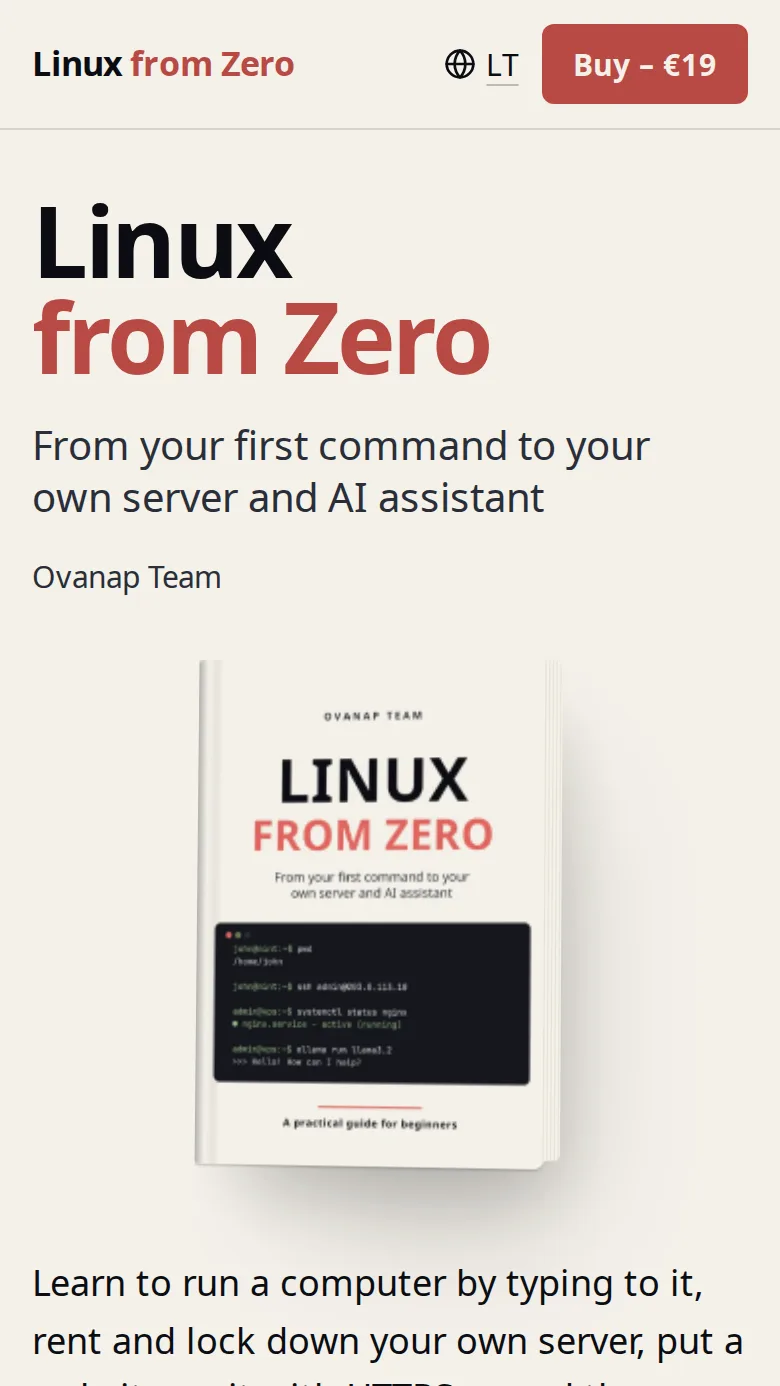
Linux from Zero
The same book in English — from the first command to your own server and AI assistant.
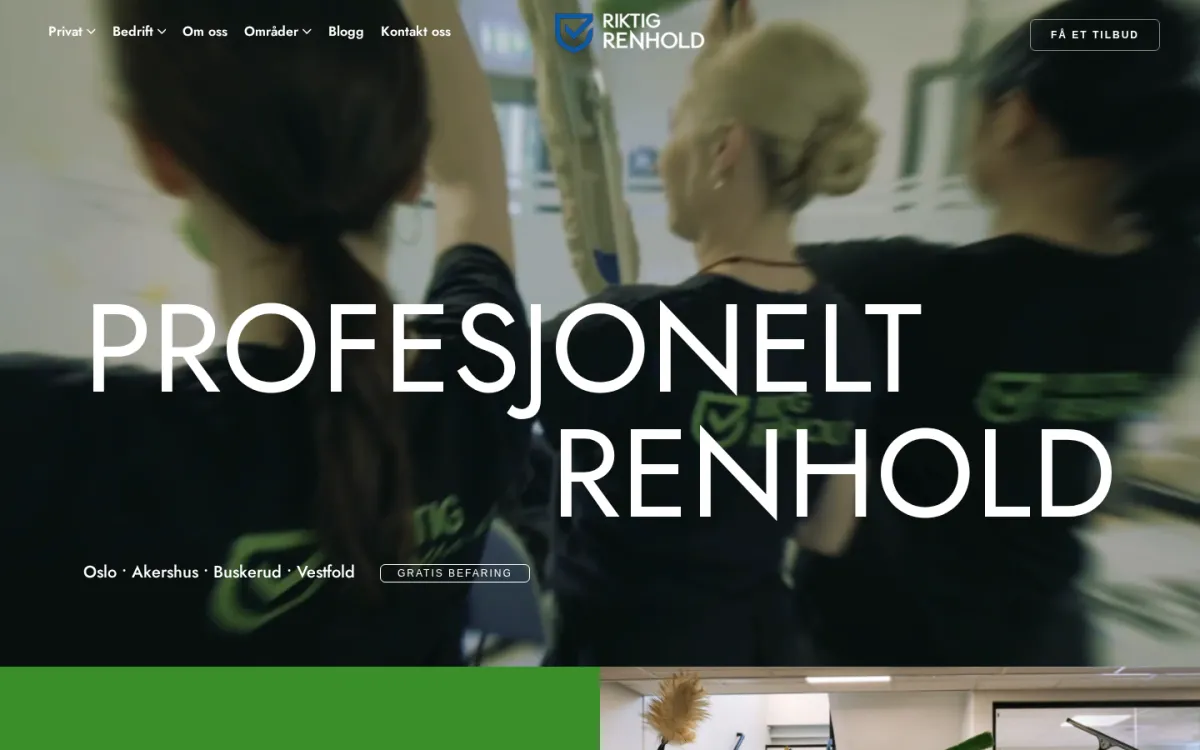
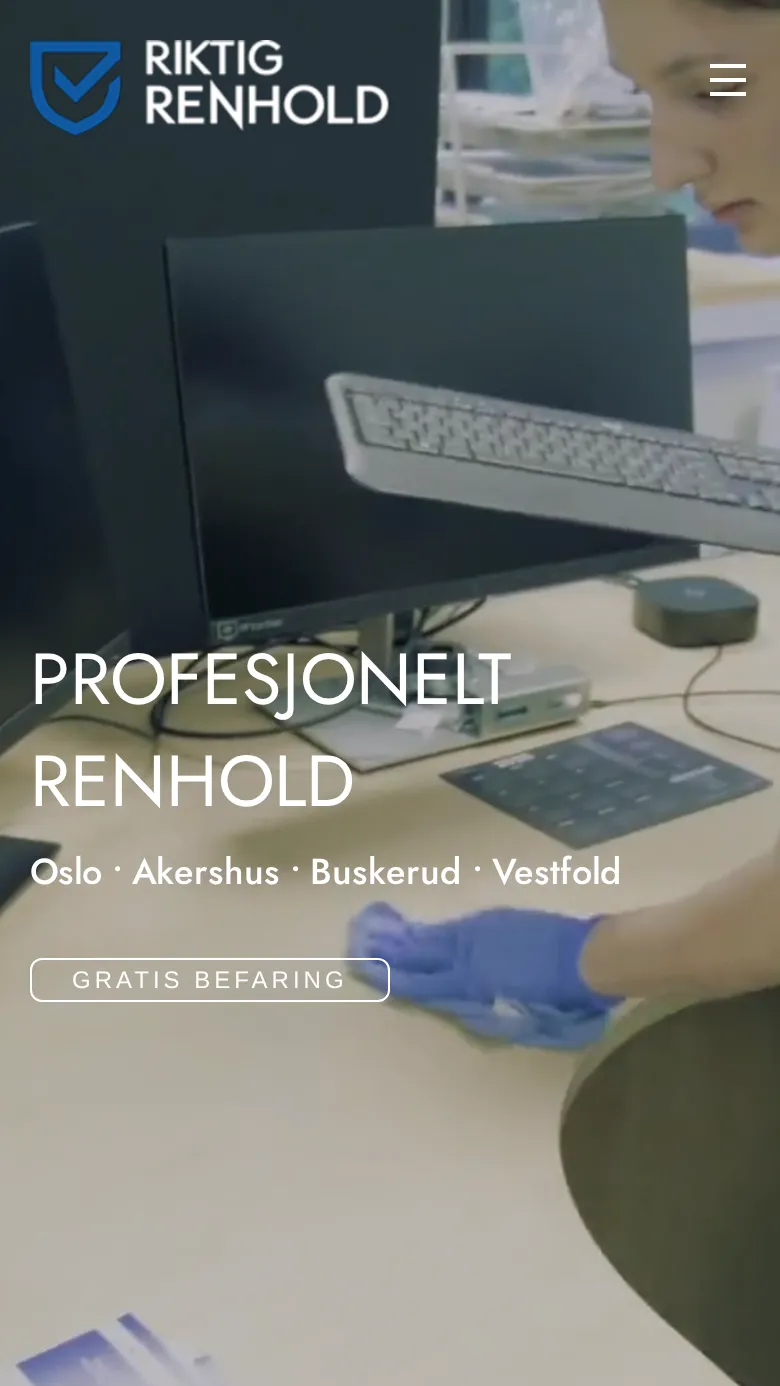
Riktig Renhold
Cleaning company with its own pages for private, business and each area — a quote and a free site visit from the page.
From visit to enquiry
The customer finds you
On Google, in the map or through an ad, and lands on the right page.
She gets in touch
The page says what you do and where, and the form asks for what you need.
You receive the enquiry
It arrives in your inbox, and the tracking shows where the customer came from.
What we do
Built around your customers’ questions
We start with what customers want to know before they get in touch: services, area, price and references. Every page gets one clear next step.
Forms that actually arrive
The form asks for what you need in order to reply, and we test it all the way to your inbox before launch. See examples from construction and trades.
Fast and easy to read on a phone
Most visits come from a phone. We measure speed and readability on real screen sizes, not only in a design program.
You update the content yourself
You change text, images, opening hours and projects yourself. We build in WordPress when you want to edit in a familiar tool, and on a simpler, faster platform when speed and little upkeep matter most. The content is yours, and the site can be moved to another provider.
Questions we often get
Does a small business really need its own website?
Yes, if your customers compare before they get in touch. Your Google profile and social media help, but on your website you decide what the customer sees. For many businesses, one good page is enough.
What does a new website cost?
It depends on what the site has to do: the number of pages, the texts, forms, booking or a webshop. You get a written proposal with scope and price before anything starts. This guide explains what drives the price.
How do we get a website for the business, and what do we need to have ready?
Start with what the site should get customers to do: call, send a request, book or buy. Have a short text about each service ready, the area you cover, some real photos and who should receive the enquiries. Then choose whether to build it yourself in a tool such as Wix or Squarespace or have it made, and make sure the domain is in the company’s name either way. Doing it yourself or using an agency is explained in a separate guide.
Can the website take payments without being a webshop?
Yes. If you sell a few services, appointments or gift cards, customers can pay with Vipps (the Norwegian mobile payment app) or by card right on the site or in the booking, without a full webshop. If you have many products with shipping and stock, a webshop is the better fit. Either way you need a business agreement with the payment provider, and the payments must be recorded correctly in your accounts.
Can you improve the website we have instead of making a new one?
Often, yes. Many sites need better texts, faster loading and forms that work, not a completely new site. We look at what is there first.
Will we lose our Google ranking when we change websites?
Not if the move is done properly: every old address sends people on to the right new page, and the content comes along. We list all the old pages before the move and check afterwards that no old link ends on an error page. Your e-mail is not touched.
Who owns the website?
You own the domain and the content. We set it up so you can move the site to another provider if you want to.
Does a private business need an accessibility statement?
No, the duty to publish a statement applies to public bodies. But websites aimed at the public should also be usable by everyone when a private business runs them.
Does the website need a privacy policy?
Yes, if the site collects information about people, for example through a contact form, bookings, a newsletter or visitor statistics. The privacy rules require you to say what you collect, why, how long you keep it and who you share it with, in plain language and separate from other terms. Write it from what the site actually does, and link to it from the forms and at the bottom of every page. The Norwegian Data Protection Authority (Datatilsynet) has guidance on what to include.
How do we get more enquiries from the same visitors?
Make it easy to get in touch where the customer is: the phone number visible on phones, one clear next step on every page and a short form. First check that the form actually delivers, or you are improving something that does not work. Then change one thing at a time and compare the number of enquiries before and after.
How do we get a course sign-up system on our own website?
You put the sign-up straight on the course page, so the participant picks a course, fills in name and e-mail and gets a confirmation at once. Before we build, you decide how many places each course has, whether the participant pays with Vipps straight away or gets an invoice, and what happens when the course is full. We have seen the confirmation land in spam, so we test it before opening. You get a written proposal with scope and price before anything starts.
What should the website do for you?
Describe the business and what the site should achieve, or send the link to the one you have. You get a written proposal.